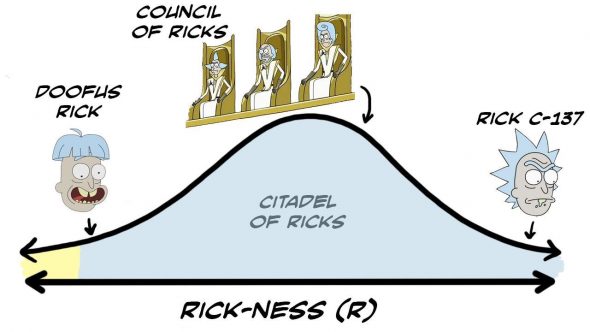
Anyone with a sixth grade education should probably already know who Joseph Campbell is. An American mythologist, anthropologist, and author, Campbell was the first to define the perameters of the “Hero’s Journey“, a basic plot outline that most epic tales passed down through history follow. If you are not yet familiar with the “Hero’s Journey”, do not despair. This post will educate you.
posted by Guest Writer on Thursday, February 4th, 2010 at 7:00am
[Political humor today from this guest writer. Want to trivialize tragedy through commerce? Never forget… to suggest your own patriotic t-shirt in the comments.]
Throughout history, enterprising men and woman have taken advantage of tragedy and despair to turn a quick denarius, pound, shilling and dollar. When tragedy struck, vendors of every age pulled out their screens, dusted off a few patriotic slogans and started printing t-shirts. And for some reason there were eagles on them.
The art of patriotic eagle t-shirt printing began in the last years of the Roman Republic, when vendors near the Capitol set up their tents and started selling black and white SPQR caps and these fashionable tunics.
posted by Guest Writer on Friday, January 29th, 2010 at 4:11pm
[To mark tonight's series finale of Dollhouse, we present a guest article by Jon Eric offering a controversial take on the show's cancellation. We've already had a lotto say about the series; see if you agree with Jon about the justification for the cancellation. And come back on Monday to hear the podcast panel's analysis of the final episode and of the series as a whole.]
For real this time.
Today marks the series finale of Joss Whedon’s most recent baby, a sci-fi drama named Dollhouse. It was a rough two years, and perhaps the biggest surprise was the show’s longevity—Whedon’s last attempt at a weekly television show was cancelled after only half a season, so his fans were especially vigilant this time around: “Save Dollhouse” websites had cropped up before the show even premiered.
But in between the appearance of the first “Save Dollhouse” website and the airing of the first Dollhouse episode, Whedon’s fans seem to have turned on him. What happenedx? Maybe it had something to do with the promotional materials – how can you encapsulate such a high-concept science fiction show in a :30 TV spot? – or maybe the perception (justifiable, even if incorrect) that Joss’ Dollhouse was nothing more than a particularly highfalutin whorehouse. In the face of controversial subject matter, Whedon loyalists had a hard time coping, and some lost their faith. After all, it’s difficult to defend, let alone recommend, a show whose first-season advertising was dominated by this:
Look at how they repeat-edited the words “Dominatrix scene!” Like the network was salivating over this one little bone Whedon and Dushku had thrown them: “At last, something we can use to market this nerdy show to the hornballs who actually watch Fox on Friday nights!”
But in fact, the “Dominatrix Scene” in the show is little more than what we see in that trailer – it’s an establishing shot, a throwaway scene. She’s returning from an engagement we never see, for a client we never meet, and why should we? It’s just your standard submissive john. Why would we be interested in some standard dominatrix encounter when there are so many more interesting stories to be told?
Somehow, the die-hards missed the subtext. Whether it was Fox’s failure to communicate the concept, or the netroots feminist movement crying out against Joss’ handling an admittedly delicate subject matter (or both), Whedon’s already-small fan base fragmented itself and Whedon’s self-proclaimed feminism came under fire.
Here’s the problem: when a core audience as small as Whedon’s fragments, the resuling fraction isn’t enough to sustain a show on a major network. Especially when it airs on a Friday night. Dollhouse didn’t have a large advertising budget, Fox didn’t seem that interested in pushing the ads, and it’s not as though the concept were easy to pitch, so the series never really had a chance at an audience any larger than the supposedly-loyal Whedon fanbase. As it happened, they got something quite a bit smaller, and now the show is cancelled due to poor ratings.
It’s easy to blame Fox for all the mishandling. Fox has killed so many worthy series in the past; what’s one more? I don’t deny that Fox’s lack of care with their product helped to ensure an early demise… But some of the blame rests with Whedon, too. I submit that Whedon’s show was terminally flawed from the start, that its premise defied an audience, that its writing team is guilty of fatal sloppiness — in short, that unlike its predecessor, Dollhouse deserved to be cancelled.
There’s an entire school of debate about which is better, The Simpsons or Family Guy. In my mind, it’s no contest; Homer and his yellow-skinned brood smoke the competition when it comes to comedy that comes from plots and not hilarious-yet-distracting cutaway gags. But the ultimate triumph of Groening and company comes from one simple fact: you have no clue where Springfield is.
We all have a touchstone in our lives. The one thing we hold closest to our hearts. The one thing we can always rely on. For some it’s family or religion. For others it’s bees (apiarists mostly). For me, it’s The Simpsons. As far as I am concerned it is the most glorious thing mankind has ever accomplished, and you can take all your airplanes, polio vaccines, and wheels and jump in a lake if you disagree. On December 17th, the show celebrated its 20th anniversary. There have been 450 episodes, and I have seen every single one of them.
Of course, people have been complaining about the show for years. Cries of “Worst episode ever” have been heard for so long, they were able to deal with it in “The Itchy and Scratchy and Poochie” episode (my personal favorite) and that was all the way back in season eight when the show was still fantastic. I have never been one who likes to bemoan the show. If anything, I am a Simpsons apologist. Yet even I must admit the show is a mere shadow of what it used to be. In fact, I don’t even really look forward to new episodes anymore. I merely sit down in front of my TV (or my internets, more often) and hope for the best. I no longer love the show, but I cannot bring myself to leave them. You know, like most marriages.
In fact, and I it depresses me to even have to say this, but last season me and the show had our lowest moment; I couldn’t make it through the full episode. It was just too bad. It was the episode “Double, Double, Boy in Trouble” in which Bart meets his exact double who, get this, comes from a rich family! Hilarity didn’t ensue, soul crushing did. I made it through leprechaun jockeys. I made it through raccoon families that look like the Simpsons. I couldn’t make it through this.
posted by Guest Writer on Tuesday, December 8th, 2009 at 7:00am
[Today, a consideration of Taylor Swift by frequent contributor Trevor Seigler. —Ed.]
By about the third or fourth time (well, maybe the three hundredth or four hundredth time) I’d heard Taylor Swift’s hit single “You Belong With Me,” I began to think she might be mentally unstable. You can’t miss the song, it’s on the radio constantly and so catchy in its own right that you’ll be unwillingly humming it to yourself for days. But the lyrics leave Ms. Swift open to the possibility that she might be some sort of passive-aggressive stalker.
posted by Guest Writer on Thursday, December 3rd, 2009 at 6:58am
(Guest writer Chris Morgan returns with an examination of the celebrity judges on Iron Chef America)
Once upon a time, there was a Japanese cooking based competition show called Iron Chef. In said show, an esteemed chef would challenge one of the titular Iron Chefs in a battle revolving around a secret ingredient. The show found a foothold in America because (1) It was a good show and (2) There was a bit of a kitsch factor to it, because, after all, anything than is dubbed is totally hilarious am I right? Although, truth be told, I was always endlessly amused when they would show the dishes and explain them in unnecessarily florid language as easy listening music played in the background.
An American version was tried in 2001 by UPN, one of the parents of The CW along with the WB, called Iron Chef USA. Unfortunately, the show decided to focus on the kitschy aspects of the original, as evidenced by the fact the chefs had nicknames such as “The Italian Scallion” and that William Shatner was the host. It lasted a whopping two episodes, just like the Mike O’Malley Show.
Fortunately, the Food Network decided to give it another go with Iron Chef America. Wisely, they focused on the food based competition and brought in host of Good Eats and all around awesome guy Alton Brown to host. The show has found quite a bit of success, and I personally am a big fan of it.
posted by Guest Writer on Wednesday, November 25th, 2009 at 7:01am
[Hey, Overthinkers - enjoy this Verhoeverthinking It Week guest post from Diana Barnes-Brown]
When I started the initial Overthinking for my Paul Verhoeven Week Basic Instinct Guest Post, the thought process was more or less as follows:
Michael Douglas + crazy bi chick + Paul Verhoeven = Hollywood hates women! Let the crucifixions begin!
But lots of things are happening in Basic Instinct, and only one of them is misogyny – so why essentialize? Keep reading for a brief rundown of the more interesting plot points, some feminist issues as a jumping off place for (what I hope is) more subtle criticism, and of course the obligatory reference to vagina bugs/Starship Troopers.
posted by Guest Writer on Thursday, November 12th, 2009 at 6:59am
Today’s guest post is an analysis of Billy Joel from Chris Morgan. Want to light it? Try to fight it? Let us know in the comments.
We all know the song “We Didn’t Start the Fire” – it’s the Billy Joel song that isn’t “Piano Man” (or “You may be Right” for you Dave’s World fans out there). It’s the song where Mr. Joel sort of talk-sings his way through a bunch of names and things from history. In many ways, it is the spiritual, intelligible forefather to R.E.M.’s “It’s the End of the World as we Know it (And I Feel Fine)” (sing it with me now: Dun duhduh, duhduhduh, Leonard Bernstein!). It also has a bad music video. However, none of that is of particular importance or interest to me. I’m much more interested in what this song says about Billy Joel.
posted by Guest Writer on Tuesday, October 13th, 2009 at 7:00am
[Enjoy today's guest post by Craig Spivack. Don't forget to leave some feedback in the comments.]
Video games are an important part of culture, but are rarely psychoanalyzed in the same way that literature and film are. One famous video game that deals with Oedipal conflicts and phallic imagery is Star Fox 64. The story of the game encompasses many of Freud’s psychoanalytic ideas, and speaks to the game player.