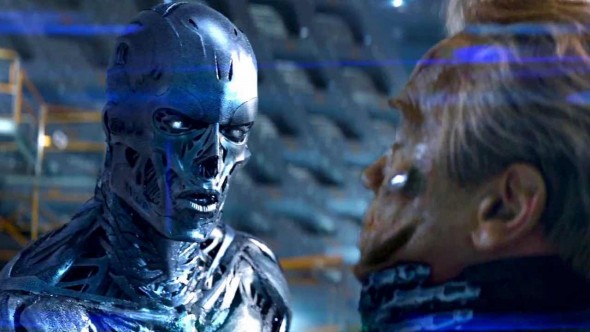
These have been difficult days for me. As a die-hard Terminator fan, I went into a screening of Terminator: Salvation knowing that the movie was getting bad reviews, but still holding onto a sliver of hope that this latest installment to my beloved franchise would remain true to the “real” Terminator and right the many wrongs of Terminator 3: Rise of the Machines.
As we all know now, the movie was a sloppy, shoddy disappointment (you can listen to me rant about its shortcomings in this podcast episode; I won’t retread that territory here). That disappointment was bad enough, but in the ensuing weeks after seeing Terminator: Salvation, an even worse thing happened: I came to the sad conclusion that a huge part of the Terminator ethos, the franchise’s mantra and guiding light, is one big fat lie:
“No fate but what we make.”
For years, I fooled myself into holding onto this phrase like some sort of holy writ, but now, at this nadir moment, I must recognize the truth: “no fate but what we make” is demonstrated poorly at best by the movies/TV shows–even in the greatness that is Terminator 2–and flat out contradicted by the meta-narrative of the franchise.
“No fate but what we make?” My ass.
[This post begins Terminator Week on Overthinking It. –Ed.]

(Photoshopping courtesy of the lovely and talented Mr. Lee)
To be honest, I didn’t start watching “Terminator: The Sarah Connor Chronicles” with high hopes. Terminator 3 had its moments, but it also had all the hallmarks of a franchise-killer, and TV spinoffs generally don’t inspire a lot of confidence. (With “Happy Days,” “Mash,” and “Buffy the Vampire Slayer,” the track record is actually better than you might think… still, I was expecting something closer to “Highlander: The Series”). Anyway, I’m glad that my girlfriend talked me into giving it a shot, because the show is really very good. Today I’m here to overthink the reasons why.