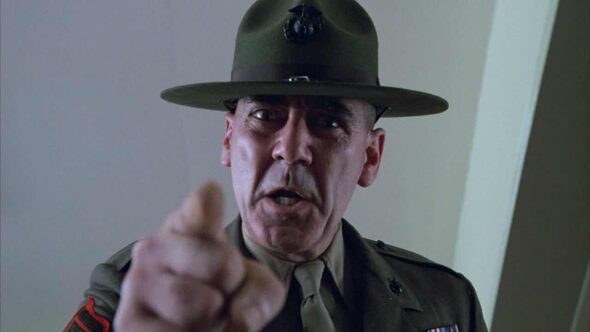
If you’ve had any access to online or conventional media in the continental U.S. for the past 60 days, you’ve seen an ad for the upcoming bro movie She’s Out Of My League:
On the surface, a forgettable sex comedy. Adorable schlub lands major-league hottie; usual series of pratfalls and embarrassing incidents; he rises to the occasion and proves himself worthy of her love. No bankable stars and plenty of references (the TSA, iPhones) that will hopefully seem dated in ten years. The tone’s a little more crass than usual, but no worse than anything we’d see in the Eighties. Or Nineties. Or Aughts.
Of course, I liked it much better the first time I saw it, when it was called (500) Days of Summer.
posted by callot on Wednesday, December 23rd, 2009 at 7:00am
Joss Whedon is a feminist! His shows feature complicated female characters as the protagonists!
No, Joss Whedon is a misogynist! He revels in torturing and degrading women!
Feminist! By giving female characters the opportunity to suffer like male characters, he makes the audience identify with women!
Misogynist! His female characters are hyper-sexualized objects of the male viewer’s gaze!
Whedon is sex-positive and allows his female characters to express sexual desire without punishing them!
Whedon blah blah blah…
This could go on for a while. Googling “Joss Whedon feminist” brings up more than 50,000 results. The Geek Feminism Wiki lists several articles debating the issue, including interviews with Whedon in which he explicitly self-identifies as a feminist, and even that listing is grossly incomplete. By far, feminism is the principal discourse in the global overthinking of Whedon’s TV shows, and Whedon is the major contemporary pop cultural focus for the debate on feminism in narrative television. This makes sense, as his series Buffy the Vampire Slayer and Dollhouse (and to a much lesser degree, Firefly) address feminism in their basic premises in a way that no other show on television has.
Strange, then, that the most persistent issue in regards to Whedon’s feminism is its authenticity.
posted by Matthew Belinkie on Thursday, December 17th, 2009 at 11:54am
These cows almost killed Disney.
It was only five years ago that Disney ran up the white flag and did the unthinkable: it shuttered its 2D animation facilities. This is the Walt Freaking Disney Company: they invented animated movies as we know them. But a series of flops (Treasure Planet, Brother Bear, Home on the Range) at the same time as Pixar churned out a string of instant classics was too much for the Mouse House. They decided that the public clearly wanted computer animation, and that’s what Disney was going to give them.
Except that didn’t work either. 2005’s Chicken Little didn’t even make back its budget domestically. So in 2006, Disney took the if-you-can’t-beat-’em-join-’em route, purchasing Pixar for $7.4 billion (which actually seems like a steal to me). The Pixar people were suddenly in charge of Walt Disney Animation… and the first thing they did was get the 2D animation department back up and running.
John Lasseter and Co. were betting that audiences hadn’t stayed away from Home on the Range because it was 2D. They had stayed away because:
a) It was lame, but more importantly…
b) a trio of sassy cows wasn’t what audiences wanted to see from Disney.
Anyone who’s been around a little girl in the last twenty years knows that the old Disney films still resonate, maybe even more than the new Pixar stuff. In 2009, the Disney Princess line of merchandise netted over $4 billion for the company. In a way, the continuing popularity of those 2D films is what enabled Disney to buy Pixar.
So when they set out to make The Princess and the Frog, they had a tricky task: produce something that recreated what people loved about the old Disney movies (especially the early-90s triumvirate of Little Mermaid, Beauty and the Beast, and Aladdin), but also something creative enough to get consumers back into the habit of reflexively going to Disney movies. It’s sort of like making a Bond movie–you need to stick to the formula, but also keep it fresh.
So how did they do it? Well, let’s go to the chart. (And by the way, bigtime Princess and the Frog spoilers begin now.)
posted by Guest Writer on Wednesday, November 25th, 2009 at 7:01am
[Hey, Overthinkers - enjoy this Verhoeverthinking It Week guest post from Diana Barnes-Brown]
When I started the initial Overthinking for my Paul Verhoeven Week Basic Instinct Guest Post, the thought process was more or less as follows:
Michael Douglas + crazy bi chick + Paul Verhoeven = Hollywood hates women! Let the crucifixions begin!
But lots of things are happening in Basic Instinct, and only one of them is misogyny – so why essentialize? Keep reading for a brief rundown of the more interesting plot points, some feminist issues as a jumping off place for (what I hope is) more subtle criticism, and of course the obligatory reference to vagina bugs/Starship Troopers.
posted by Matthew Belinkie on Tuesday, November 24th, 2009 at 7:00am
Matt: I like Showgirls. And I don’t mean I like it in the “so bad it’s good” way I like The Postman. I actually think Showgirls is a good movie. There, I said it.
Notice I didn’t say it was a GREAT movie. Certainly, it’s nobody’s favorite Paul Verhoeven flick (unless you grew up with a major crush on Jesse Spano). But you know what? I like it better than The Hollow Man.
Showgirls tells the story of Nomi Malone, a tough blond who hitchhikes into Vegas with nothing but a single suitcase (which immediately gets stolen). But she’s got two things nobody can take away: a great body, and a gift for dancing. Nomi starts out at the seediest strip club in town. But soon she breaks into the chorus of Goddess, a lavish stage show at a big casino. There, Nomi faces off with the queen bee, Cristal Connors, who either wants to befriend her, destroy her, or turn her into a sex toy.
Nomi may be a topless dancer, but she repeatedly insists she’s not a whore and she’ll never be like Cristal. But (surprise surprise) the higher she climbs, the more she becomes everything that once made her seethe. It’s a story as old as All About Eve, but with the sex jacked up to eleven. This is the most-expensive NC-17 rated film ever produced, and you will see more breasts than Frank Perdue.
It sounds fun, right? It IS fun, damnit. But for reasons I don’t fully understand, conventional wisdom firmly believes that this film is one of the worst of all time. It has an abysmal 14% fresh rating on Rotten Tomatoes, and it won the un-coveted “Worst Movie of the Decade” award at the 2000 Razzie Awards. In fact, Showgirls has won more Razzies than any movie ever made. It’s a cinematic punching bag. And I don’t think it deserves it.
posted by Matthew Wrather on Monday, October 5th, 2009 at 12:17am
Matthew Wrather hosts with Peter Fenzel, Mark Lee, and John Perich and special guest Amanda Marcotte to revisit l’affaire Polanski and talk about the trivializing of sex crimes and then proceed to trivialize sex crimes by segueing to David Letterman, Robert Evans (the movie producer), Bob Evans (the restaurant), the Arbys Logo, and the Dialectic of Bruce Springsteen.
Tell us what you think! Leave a comment, use the contact form, email us or call 20-EAT-LOG-01—that’s (203) 285-6401.
posted by lee on Tuesday, September 22nd, 2009 at 7:00am
At first blush, the Black Eyed Peas’ “I Gotta Feeling” may be one of the most inane song ever written (Cracked.com certainly thinks so). The lyrics basically consist of a series of non sequitur party-related cliches. (Then again, I suppose that description could apply to most pop songs. But I digress.)
In other words, it’s the perfect candidate for Overthinking It’s “Musical Talmud” treatment, in which we subject the lyrics of pop songs to a level of scrutiny they really, really, don’t deserve.
posted by Think Tank on Friday, August 28th, 2009 at 6:54am
The continued critical acclaim and box office success of District 9 proves that audiences are comfortable with aliens as metaphor for apartheid. So the Overthinkers tackle other cultural artifacts that have used aliens as metaphor for something in the human condition. For only by stepping outside of ourselves … can we see ourselves … as we are.
Which is your favorite “aliens as metaphor” piece of pop culture? And did we miss one of the classics? Sound off in the comments!
posted by Think Tank on Friday, July 10th, 2009 at 9:04am
[This week, the Think Tank tackles a seminal work of 1980's literature: the lyrics to Bon Jovi's "Livin' on a Prayer." Stay tuned next week for music theory analysis.]
Literary Theory, Mlawski Knowing nothing about music theory and unable to come up with anything of note to say about “Living on a Prayer” as poetry, I’ve decided to complete an assignment I once had to do when I was getting my masters in English education. It’s… the literary theory assignment! Behold!
Living on a Prayer, the New Criticism reading: The lyrics start with the claim that this story happened “once upon a time, not so long ago,” which is our cue to read the text as a modern day fairytale. What happens in the text itself, however, is not the stuff of fairytale at all. “Tommy,” our dock-worker, is no knight in shining armor, though he tries to be by putting his six-string in hock. But, like Prince Charming in the fairy stories of old, Tommy does represent Everyman, the ideal. Likewise, “Gina” is no princess, but she is indeed a damsel in distress, the Everywoman in need of protection. Thus, the “once upon a time” introduction to the song is meant to be a somewhat ironic reference that suggests that “Living on a Prayer” is at once a fairytale and something of a satire of one.
posted by Matthew Belinkie on Thursday, June 4th, 2009 at 6:43am
What is keeping Ariel upright?
Unless you have hung out with a little girl during the past ten years, you may not be aware of the Disney Princess phenomenon. Sure, Disney’s had princesses for years, and generations of girls have wanted to be them. But it wasn’t until 2001 that the company got around to creating an official Disney Princess brand, selling apparel, toys, videos and pretty much everything else that they could slap a picture of a princess onto. The New York Times reported that there are 25,000 products in all, and the franchise grosses over $3 billion a year. And that article is three years old.
There’s a lot of be disturbed about here. Some of the older Disney films are pretty retrograde to begin with—Sleeping Beauty meets the prince on her 16th birthday, and marries him pretty much the next day. The newer heroines are better role models, but in the context of the Disney Princess brand, they’re presented as pretty little flowers, not women of action. And I don’t need to point out that all of them make Nicole Richie look fat.
But I’m not going to discuss the feminist implications of this marketing juggernaut. (If that’s what you want, the Times article above does a good job.) Instead, look at this photo of the Princess lineup. Four of the girls are princesses by birth (Sleeping Beauty, Jasmine, Snow White, and Ariel). One of them marries a prince to become a princess (Cinderella).
That leaves Belle, who I’m not sure really qualifies.