Articles tagged with time paradox

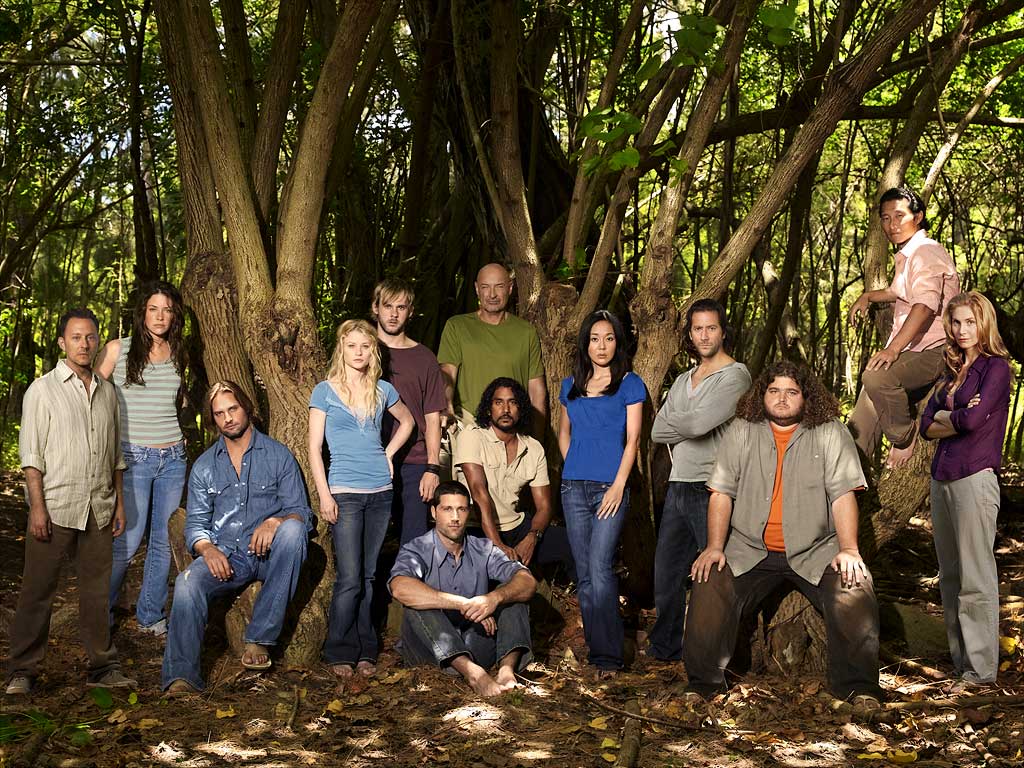
Overthinking Lost: Season Four

posted by mlawski on Monday, August 24th, 2009 at 6:51am
What, does no one smile in season four? Cheer up, guys!

What, does no one smile in season four? Cheer up, guys!

Hey, folks!  I’m back and ready to Lost-ify.  Special thanks to Ryan Sheely for holding the fort until I returned.  I haven’t read his article yet—he warned me it was not only primarily spoilers, but in fact only spoilers—but my mother ensures me that it is an enchanting piece of work.  If you haven’t read it yet, please do so—but only if you’ve seen all of Lost season five.

I, however, am way back in the land of the fourth season, and I’d like to talk about time.  Time is… confusing.  To say the least.  (I know this because I saw The Time Traveler’s Wife last night.  My one-word review of the film: Mehhhhhh.)

We humans tend to think of time as a straight line pointing forward—but is it, really?  Lost’s writers certainly don’t think so.  That would be too simple, and, as we well know, Lost doesn’t like simple.

Plot-wise, Lost’s fourth season was exciting and somewhat overwhelming.  A staggering number of important events occurred over the course of just twelve episodes.  Because there was so much plot, it was hard for me to tell if there was an overarching theme tying everything together.  But if I had to pinpoint one main theme of this season, it would definitely have something to do with the nature of time.  Over the years, science-fiction writers have used time travel and paradoxes to explore many different themes: the inability of humans to escape the deterministic nature of the universe, the joint themes of regret and revenge, love’s ability to transcend time and space.  So this week, I’ll try to answer this question: when Lost starts talking about time machines and psychic flashes and trick flashforwards, what is it really talking about? What is time a metaphor for?  At heart, what is season four of Lost about?

But first, let’s recap the episodes I watched over the past two weeks:

A Brief History of Time Travel: Star Trek Edition

posted by Guest Writer on Sunday, May 31st, 2009 at 12:52am

[This weekend's second guest article comes from Chris Richards. How could we resist—he takes up one of our favorite topics for overtinking: time travel. Let us know what you think in the comments!]

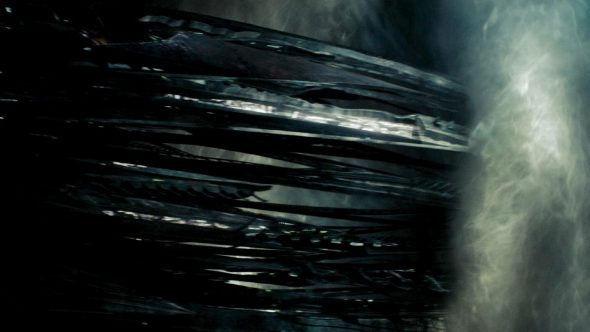
The Enterprise C emerges from a temporal rift.Earlier this month, JJ Abrams rebooted one of the most successful Sci-fi series of all time with his whiz-bang extravaganza.  But, unlike the Nolan-style reboot of Batman, Abrams didn’t ignore the fact that other movies came before.  Of course, unlike the Batman franchise, there were a lot of people who didn’t WANT to forget the other movies.  This, in and of itself, creates a problem: how can anyone reconcile the two?  Abrams decided to use one of Star Trek’s most-controversial plot devices, and creates a predictably paradoxical result.
Before going on, yes, there are major spoilers ahead for the new movie, past movies, and at least one episode of Star Trek: The Next Generation.  You’ve been warned.

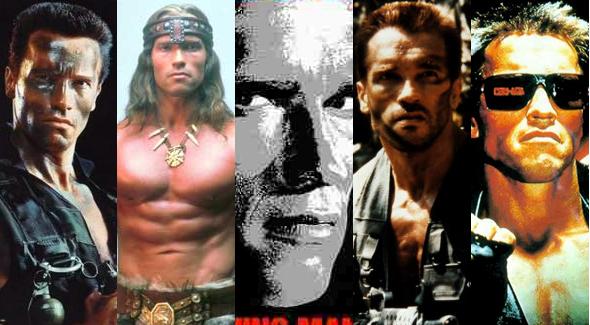
I see your Schwartz is as big as mine.Arnold Schwarzenegger was one of the first action movie stars of the 80s. Perhaps he was one of the first action movie stars, period. His predecessors to that title – Steve McQueen? Clint Eastwood? – had dramatic credits to their name as well as escapist fare (Papillon, Play Misty For Me, etc). But Arnold Schwarzenegger will never direct Million Dollar Baby. Explosive action movies sit at both the beginning and end of his range.

Consequently, not many critics take Schwarzenegger seriously as an actor. He’s a muscle-bound lunk, they claim. He’s nothing but a stony face and some catchphrases. He always plays the same role.

But what if that’s deliberate?