Articles tagged with lyrics

The Musical Talmud, Think/Counter-Think Edition: “Party in the USA”

posted by lee on Tuesday, November 17th, 2009 at 7:20am

leeLee: Hey Sheely, let’s Overthink Miley Cyrus’s hit single, “Party in the USA.”

First question: is this song even worth Overthinking?

The Musical Talmud: I Gotta Feeling

posted by lee on Tuesday, September 22nd, 2009 at 7:00am

Talmud3At first blush, the Black Eyed Peas’ “I Gotta Feeling” may be one of the most inane song ever written (Cracked.com certainly thinks so). The lyrics basically consist of a series of non sequitur party-related cliches. (Then again, I suppose that description could apply to most pop songs. But I digress.)

In other words, it’s the perfect candidate for Overthinking It’s “Musical Talmud” treatment, in which we subject the lyrics of pop songs to a level of scrutiny they really, really, don’t deserve.

The party starts after the jump…

Here at Overthinking It, we’re always trying to interpret lyrics of pop songs. Most of the time, in the “Musical Talmud” series, this involves a close reading of the text and a subjective interpretation of the work as a whole.

How old fashioned. Now, thanks to the Internet and the wonders of modern technology, we now have a new tool to help us decipher pop music lyrics: totally unnecessary quantitative analysis.

borntorun-wordcloud

The idea is to take an entire album’s worth of lyrics, crunch the numbers, see what words turn up most frequently in the lyrics, and compare those words to the common understanding of the overall “meaning” of the album as a whole. For this experiment, I’ve chosen three fairly wordy, non-repetitive albums from three different genres: Born to Run, Straight Outta Compton, and Taylor Swift’s eponymous debut album, Taylor Swift.

[This week, the Think Tank tackles a seminal work of 1980's literature: the lyrics to Bon Jovi's "Livin' on a Prayer." Stay tuned next week for music theory analysis.]

bonjovithinktank

Literary Theory, Mlawski
researchKnowing nothing about music theory and unable to come up with anything of note to say about “Living on a Prayer” as poetry, I’ve decided to complete an assignment I once had to do when I was getting my masters in English education.  It’s… the literary theory assignment!  Behold!

Living on a Prayer, the New Criticism reading: The lyrics start with the claim that this story happened “once upon a time, not so long ago,” which is our cue to read the text as a modern day fairytale.  What happens in the text itself, however, is not the stuff of fairytale at all.  “Tommy,” our dock-worker, is no knight in shining armor, though he tries to be by putting his six-string in hock.  But, like Prince Charming in the fairy stories of old, Tommy does represent Everyman, the ideal.  Likewise, “Gina” is no princess, but she is indeed a damsel in distress, the Everywoman in need of protection.  Thus, the “once upon a time” introduction to the song is meant to be a somewhat ironic reference that suggests that “Living on a Prayer” is at once a fairytale and something of a satire of one.

But as a performer and lyricist he (Kanye West)’s got nothing. The celebrity thing is annoying, but it’s his music that brings out the ass-suckery.

He has, in my opinion, no flow as a rapper and no skill as a writer. Nothing really important to say. No clever word play (which is arguably one of the foundations of rap). Nothing.

-sarielthrawn, April 17, 2009

Are we even surprised that he (Kanye) may have never seen any ‘Robocop’ movies? He probally [sic] thinks anything by Tyler Perry is genius!

-CyanideSmoker, April 17, 2009

After my last article for this site, in which I discussed the disjuncture between the Robocop films and the Kanye West song of the same name, a few of our readers left the comments that you see above, calling into question the very premise that Mr. West is worth Overthinking. Chief among the complaints were that Kanye’s skills as a rapper are sub-par and that his lyrics are as vacuous as the most banal of his peers. I had been planning on jumping in on the discussion, but by the time I had gathered my thoughts (and refreshed my memory of several of Kanye’s songs), several days had passed (which amounts to years in internet time), so I just let it drop.

Then, last week, the internets were abuzz with the leak of the new Clipse single, “Kinda like a Big Deal,” which features a guest verse by Kanye. Hearing him rap (rather than autocroon) made me think again about the debate about Yeezy’s merits as a lyricist and rapper. In particular, my attention was captured by this quatrain near the beginning of his verse:

Spittin fire on the PJ in my PJ’s
Fire Marshall said I took it to the Max like TJ
Yeah people I said Marshalls, replay
I guess I’m like the Black Marshall meets Jay

At first glance, it would seem that the haters are right—this guy isn’t saying anything! After all, ‘Ye uses the word “marshall” three times in four lines and apparently just keeps saying the letter “J” over and over to make his lyrics rhyme. However, as Fenzel’s discussion of Dragonball has recently shown, repetition can be a powerful device for creating meaning within works of art. After the jump, I’ll parse the layers of meaning in these lyrics and will show how viewing this brief quote in the context of Kanye’s total output as a rapper challenges the notion that he has “nothing really important to say.”

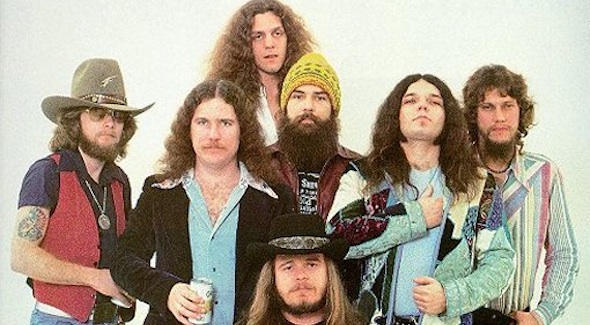
The Musical Talmud: Neon Knights

posted by sheely on Thursday, March 19th, 2009 at 7:53am

musicaltalmud_neonknights

[The "Musical Talmud" is our ongoing series that finds the true meaning behind pop music lyrics. See also Part 1, "Don't Stop Believing," Part 2, "The KKK Took My Baby Away," Part 3, "I Want It That Way," Part 4, "Chinese Democracy," and Part 5 "Happy Xmas (War is Over)."]

Oh no, here it comes again
Cant remember when we came so close to love before
Hold on, good things never last
Nothings in the past, it always seems to come again
Again and again and again

Looking at these lyrics, it is tempting to infer that they are lifted straight from one of the 80s many monster ballads, or really any other romantic pop song.  The sentiments are grand, the word choice is general, and love is mentioned in the second line, for chrissakes.   However, this inference couldn’t be too much further from the truth- these lyrics are the opening line of “Neon Knights”, the lead track on Heaven and Hell, Black Sabbath’s first album after replacing Ozzy Osbourne with Ronnie James Dio in the late 70s.  For those of you unfamiliar with Mr. Dio’s body of work, let’s just say he’s known for being heavy on the “Monster” and rather light on the “Ballad”.  Here he is performing “Neon Knights” with Sabbath back in the 80s:

Based on the title,  first verse, and one viewing of the video, it is tempting to dismiss “Neon Knights” as just another example of the excesses the dungeons and dragons wing of 1980s Heavy Metal.  After all, Dio is the singer who Tenacious D idolizes/lampoons as the patron saint of singing songs about wildebeests and angels and soaring on the wings of a demon.    However, if you stick with me after the jump, and I’ll show how Ronnie James Dio succeeds in transforming a four minute metal song into a treatise on the nature of social order.

False Dichotomies in Music

posted by lee on Wednesday, January 28th, 2009 at 7:27am

killers_day_ageHuman,” the lead single from The Killer’s latest album Day and Age, poses a baffling question:

“Are we human, or are we dancer?”

Many were quick to point out that, although not all humans are dancers, most dancers are, in fact, humans. The two are not mutually exclusive, as this handy Venn diagram illustrates:

killers-human-dancer-venn-diagram

Honestly, I've never known a Venn diagram to be anything but handy.

“Human or Dancer” is only one example of the many false dichotomies found in pop music. More logical fallacies, after the jump.

Maybe Old Media Deserves to Die

posted by Matthew Belinkie on Wednesday, January 21st, 2009 at 2:32pm

Congratulations New York Times, you’ve outdone yourselves.

Back in 2005, the Gray Lady published two spectacularly dumb style pieces: one about how men sometimes enjoy hanging out together, and the other about how women sometimes admire each other. I strongly recommend you read these – to this day, I halfway believe they are practical jokes. Anyway, last week, I would have confidently held these up as the most pointless articles the Times has ever published.

Then came Monday, and columnist Roger Cohen’s sequel to “We Didn’t Start the Fire.”

Wow.

This is such a glorious mound of Fail that I don’t know where to begin. It’s like Christmas morning.

The Musical Talmud: Happy Xmas (War Is Over)

posted by lee on Wednesday, December 24th, 2008 at 8:35am

[The "Musical Talmud" is our ongoing series that finds the true meaning behind pop music lyrics.]

war-is-over

Christmas Music WeekChristmas Talmud? Oy vey. That’s our awkward way of wishing you a Happy Overthinking It Holiday Season. Let’s take a deeper look at John Lennon’s protest/ Christmas song, “Happy Xmas (War Is Over).” Since the meaning behind this song is already well known–it’s a protest against the Vietnam War–I’m going to use this as an opportunity to examine this song as an example of “earony.”

The Musical Talmud: Chinese Democracy

posted by lee on Tuesday, December 16th, 2008 at 8:16am

[The "Musical Talmud" is our ongoing series that finds the true meaning behind pop music lyrics. See also Part 1, "Don't Stop Believing," Part 2, "The KKK Took My Baby Away," and Part 3, "I Want It That Way."]

It’s way over budget. It’s blown past multiple deadlines. I am, of course, referring to the long-awaited deconstruction of the lyrics to “Chinese Democracy,” the title track to the long-awaited Guns ‘n’ Roses Album Chinese Democracy.

tiananmen-axl2

On January 1, 2001, when Axl debuted the song at a live concert, he specifically cited Chinese political oppression as the inspiration for this song, so it’s a safe bet that Axl didn’t intend for “Chinese Democracy” to be a coded reference to something unrelated. With that in mind, let’s see what geopolitical insights Axl has to offer.