Articles tagged with literary criticism

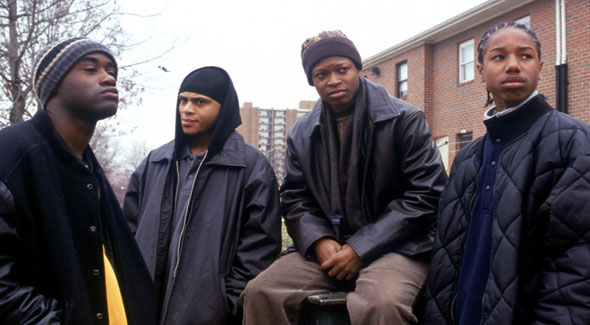
Overthinking The Wire (Season 1)

posted by mlawski on Monday, January 25th, 2010 at 7:00am

[This article is full of spoilers for season 1 of The Wire.  It covers only season 1 of The Wire, which is, thus far, the only season I’ve seen. So no spoilers for later seasons in the comments, please.]

Overthinking It, if you haven’t heard, is two years old.  Hooray, good for us, pats on the back, etc.  What’s more interesting to me is that, over those two years, we keep returning to the same question over and over and over again: How do we judge pop culture?  Is there an objective way of saying “This TV show is Good” or “This movie is Bad,” and, if so, how do we do it?

Beneath that giant rhetorical umbrella drip these fascinating sub-questions: Is Glee “good” because it’s entertaining, or is it “bad” because it doesn’t have a coherent continuity?  Should we judge Avatar based on its opsis (Aristotle for “spectacle”), based on its mythos (a.k.a. “story”), or based on other criteria?  Why does everyone consider The Simpsons of the 90s to be superior to The Simpsons on air today?  And why can’t I like the new Battlestar Galactica even though everyone tells me it’s the pinnacle of televisioned arts?

We at Overthinking It haven’t come up with real answers to any of these questions.  Well, not answers we can agree on, anyway.  Because of that, I’m coming to the conclusion that looking for an objective measure of a piece of art is an impossible task.  That’s right, folks: I’m becoming a pop culture relativist.

So “good” art is relative, huh?  No one can define it objectively; no one can agree on what it is.

Except The Wire.  Everyone agrees about The Wire.

What’s the deal?  How can people who spend hours—days, even—bickering over the merits of Showgirls and Family Guy drop their verbal weapons and sing kumbaya together over some canceled HBO series?

My answer, or at least more questions, are below the fold.

The Musical Talmud: “Get Back” (by Demi Lovato)

posted by fenzel on Wednesday, November 18th, 2009 at 7:00am

MusicalTalmud_Lovato_frontAs a follow-up to Lee and Sheely’s excellent Think/Counterthink on the Miley Cyrus track “Party in the U.S.A.,” this edition of Musical Talmud wades into the shin-deep puddle of pop that ebbs and flows in the general area of the Jonas Brothers — the sunny shoal of music that feels comfortably warm until you realize it is the kiddie pool, at which point it becomes gross and creepy.

Listeners to the podcast (and other people who make the quixotic choice of hearing me talk) know that I have my money on a dog in the Disney Channel Music fight — although she is a young girl and it’s not a nice or appropriate thing to call girls dogs. And no, I don’t have inappropriate designs on her. But I like her music and think she has a bright future.

Today in Musical Talmud, we discuss “Get Back,” the first single off the first solo album (which came out last year) by the talented singer and, in the time-honored and resurgent American tradition of pop stars who rise to stardom from movie musicals (talk about the new Great Depression!), not-especially-great-actress Demi Lovato.

And yes, she actually wrote it.

Fenzel on Dragon Ball #3: Metonymy and Metaphor

posted by fenzel on Wednesday, August 12th, 2009 at 7:16am

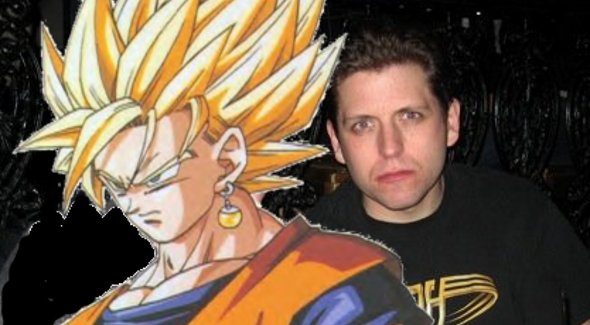
Fenzel on Dragonball titleAs we’ve established in parts #1 and #2 of this 48 part series, there are a lot of things I love about Akira Toriyama’s Dragon Ball. The disheartening arrival of the abomination Dragonball Evolution dulled my enthusiasm for a time, but I feel it flowing back into me, raisin’ the ol’ power level back up to arbitrary numbers.

Anyhoo, one of these things I really love about Dragon Ball is that its elegant, elemental narrative style and clear characterization make it easy to notice the wide variety of tropes, motifs and other devices that Toriyama uses to guide and develop his storylines. It has the epic Brechtian quality of a theatrical production where you can see the wires and the lighting equipment, without breaking the emotional identification and welcoming effortlessness of Stanislavski’s “Magic If.”

So, taking a bit of a break from using everything else I know to try to explain Dragon Ball, today I will use what I know about Dragon Ball to explain something else. Namely, one of the most useful and interesting distinction in parts of speech across poetical and literary systems, and also one of the most neglected in the casual enjoyment of art.

Today’s battle in the expansive desert, full of its elaborate rock formations that all produce prodigious dust clouds upon their destruction?

Metonymy and Metaphor. If these are things you’re not 100% solid on, read on, increase your literary power level, and actually learn something pretty simple that will help you enjoy art and lesser things you already like all the more. Because they’re certainly using it . . .

(Oh, and if you’re 100% solid on them, you’re clearly an enthusiast, so that is no excuse to turn away from the “Read More” button)

Fenzel on Dragon Ball #1: Why Overthink Dragon Ball?

posted by fenzel on Wednesday, April 22nd, 2009 at 8:14am

The basic elements of manga are characters, motif, story, theme, direction in the form of picture composition, sound, action, effects . . . and then timing, sense and many other factors . . . . I began to understand that unless I comprehended and mastered all those factors myself, I couldn’t even begin to draw even a simple “Well, it’s kinda interesting,” light-read type of manga.

Toriyama-sensei is like a god to me.

- Mashashi Kishimoto, creator of Naruto

The man who brought you all the characters from Dragon Quest/Dragon Warrior and Chrono Trigger has a magnum opus. It is one of the most widely disseminated and influential works of fiction from the waning decades of the 20th century. Many mock it, everyone imitates it, but no one duplicates it, because it has duplicated itself more than an ancestral family yogurt culture. It is a genre of one.Fenzel on Dragon Ball

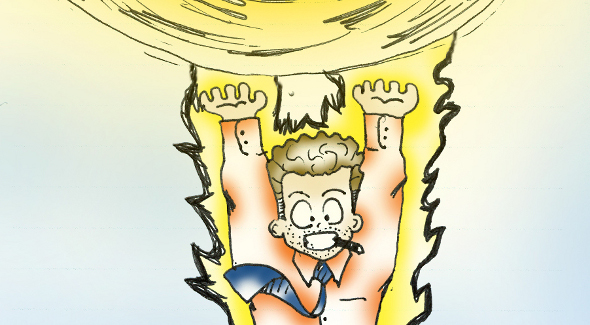
Akira Toriyama’s Dragon Ball just may be the best printed work you’ve never taken seriously. If you have taken it seriously, we here at Overthinking It are here to say: you’re probably crazy. And you’re not alone.

Today begins a series of in-depth discourses on this chi-blasting work of staggering genius. But first, I need you to do me a favor:

Stand up.

Assume a ready position, feet shoulder-width apart, staring straight ahead.

Scream for five minutes straight.

Done? Good. Now, read on –

Thanks for visiting Overthinking It, where we take movies, tv, music, comics, and videogames waaaaay too seriously.

While you’re here, check out our other articles, or just the ones about movies.

And check out our podcast (iTunes link).

If you like what you read, you can get all the latest posts by RSS or by email.

I have just finished All Work and No Play Makes Jack a Dull Boy, the debut novel by the late Jack Torrance, and I do not hesitate to call it the greatest English work of the past 50 years. It is nothing short of a complete rethinking of what a novel can and should be.

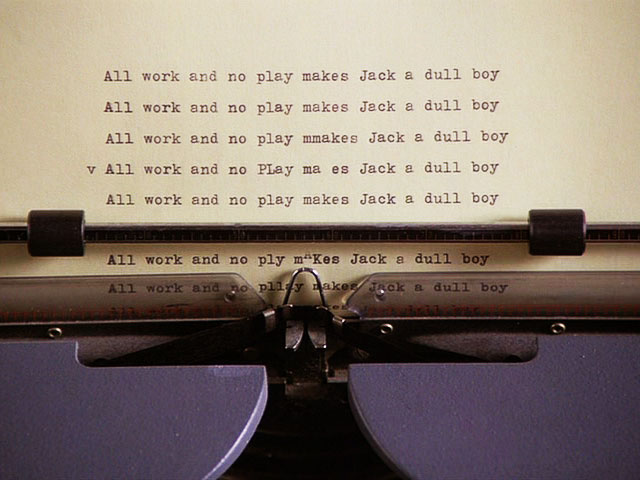
At the risk of spoiling the book, let me repeat what you may well have heard from the tabloid press and late-night comedians. All Work consists of a single sentence, repeated over and over for hundreds of pages. Some will dismiss it as simplistic; that’s like dismissing a Pollack canvas as mere splatters of paint.

It’s true that, taken on its own, All Work is plotless. But like the best of Beckett, the lack of forward momentum is precisely the point. If it’s nearly impossible to read, let us take a moment to consider how difficult it must have been to write. One is forced to consider the author, heroically pitting himself against the Sisyphusean sentence. It’s that metatextual struggle of Man vs. Typewriter that gives this book its spellbinding power.

Sadly, Mr. Torrance’s legacy has been tarnished by his widow. The couple and their young son spent the last winter of his life as caretakers of a remote mountain resort, where he put his masterpiece to paper. Mrs. Torrance has claimed that he tried to kill her and the boy in a fit of madness. Personally, I believe she is the real murderer. Mr. Torrance was found frozen to death in a hedge maze, days after his wife and son abandoned him. I find it likely that this betrayal drove him, if not to suicide, then at least to ignore his own safety during a treacherous Colorado snowstorm.

Thankfully, Mr. Torrance was able to complete All Work before his untimely death. (Although truthfully, the book’s unconventional nature makes it difficult to say whether it’s “complete” or not.) For most of his adult life, Torrance has worked as a teacher, his genius going to waste. Call it poetic justice that the resort at which he became an author is called the “Overlook Hotel.”

All Work out-moderns modernism. It surpasses post-modernism. I can only refer to it as “most-modernism.” I could easily write thousands of words on Mr. Torrance’s accomplishment, but I’ll heed the book’s advice and end my work here. Suffice to say, All Work and No Play Makes Jack A Dull Boy is a shining achievement.