Articles tagged with grammar

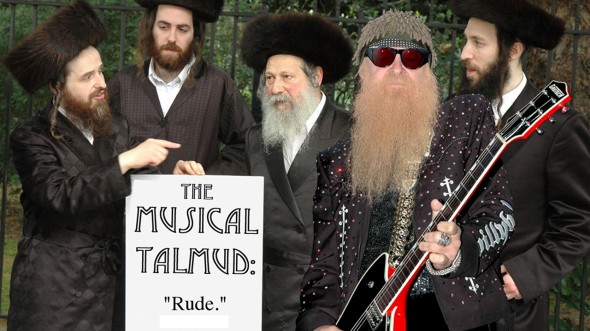
10 More Ways to Embiggen Your Simpsons Vocabulary

posted by mlawski on Monday, January 4th, 2010 at 7:00am

That’s right: embiggen.  What?  It’s a perfectly cromulent word.  I have it here right in my Scrabble dictionary in between “d’oh” and “kwijibo.”  And if you don’t like it, I’ll call you a craptacular, cheese-eating surrender monkey.  (Or your non-union Mexican equivalent.)

Okay, so we know that The Simpsons has hit the big time language-wise, what with words like “meh,” “yoink,” and “d’oh” entering the dictionary and sayings like “I, for one, welcome our insect overlords” and “worst episode ever” entering the popular lexicon.  These words and phrases still have power, and they’re still funny—after all, if they weren’t, the memes wouldn’t continue living on in blog posts, YouTube videos, and YTMND… things.

But I think we’re due for some new* Simpsons-related bon mots, don’t you?  So I’ve scoured Simpsons episodes and episode guides for the top ten useful words and sayings that need to find their way back into our lives.

*And by “new,” of course, I mean old: all of these words and saying come from The Simpsons’ first through eighth seasons—you know, the good ones.

Fenzel on Dragon Ball #3: Metonymy and Metaphor

posted by fenzel on Wednesday, August 12th, 2009 at 7:16am

Fenzel on Dragonball titleAs we’ve established in parts #1 and #2 of this 48 part series, there are a lot of things I love about Akira Toriyama’s Dragon Ball. The disheartening arrival of the abomination Dragonball Evolution dulled my enthusiasm for a time, but I feel it flowing back into me, raisin’ the ol’ power level back up to arbitrary numbers.

Anyhoo, one of these things I really love about Dragon Ball is that its elegant, elemental narrative style and clear characterization make it easy to notice the wide variety of tropes, motifs and other devices that Toriyama uses to guide and develop his storylines. It has the epic Brechtian quality of a theatrical production where you can see the wires and the lighting equipment, without breaking the emotional identification and welcoming effortlessness of Stanislavski’s “Magic If.”

So, taking a bit of a break from using everything else I know to try to explain Dragon Ball, today I will use what I know about Dragon Ball to explain something else. Namely, one of the most useful and interesting distinction in parts of speech across poetical and literary systems, and also one of the most neglected in the casual enjoyment of art.

Today’s battle in the expansive desert, full of its elaborate rock formations that all produce prodigious dust clouds upon their destruction?

Metonymy and Metaphor. If these are things you’re not 100% solid on, read on, increase your literary power level, and actually learn something pretty simple that will help you enjoy art and lesser things you already like all the more. Because they’re certainly using it . . .

(Oh, and if you’re 100% solid on them, you’re clearly an enthusiast, so that is no excuse to turn away from the “Read More” button)

Thursday Grammar: Christ puts the X in Xmas

posted by Matthew Wrather on Thursday, December 25th, 2008 at 8:20am

Thursday Grammar is back! Did you miss me?

One thing grates on my nerves more than the the egregious examples of poor usage and idiocy I have tackled in this series: When people correct others incorrectly or, more bluntly, when people who don’t know what the hell they’re talking about and are snobs about it.

Case in point: “Xmas.” The nuns who taught my father in Catholic elementary school would rail against this abbreviation, claiming that it was a sacrilege worse than claiming you’re bigger than Jesus or something.

Apparently, they couldn’t be bothered to look in a dictionary. Here’s the American Heritage Dictionary (4th ed., 2000):

Xmas has been used for hundreds of years in religious writing, where the X represents a Greek chi, the first letter of , “Christ.” In this use it is parallel to other forms like Xtian, “Christian.” [Or Xtina. —Ed.]

But people unaware of the Greek origin of this X often mistakenly interpret Xmas as an informal shortening pronounced (ksms). Many [idiots] therefore frown upon the term Xmas because it seems to them a commercial convenience that omits Christ from Christmas.

OK, I added “idiots” in the paragraph above. But the dictionary wasn’t being snarky enough.

A funny postscript: As an adult, my dad decided, nuns be damned, he was going to write “Xmas”, figuring that because the letter “X” is cruciform it is an acceptable symbol of Christianity. This is an example of speculative folk etymology, something I’ve taken up before. Though you have to admire the brand integration: X, chi, the cross — they do all seem to fit together.

Merry Xmas!

Thursday Grammar: Begging The Question

posted by Matthew Wrather on Thursday, October 23rd, 2008 at 3:32pm

The phrase “begs the question” does not mean “raises the question.” “Beg the question” means “engage in circular reasoning” (within a single syllogism), or, more precisely, “assume the truth of the proposition you purport to be proving.”

For example, the fact that the phrase is so frequently misused does not beg the question of how our culture’s knowledge of the language we all supposedly speak has gone down the crapper.

Though it does raise it.

[Ed. Note: Yes, it is not Thursday. But something happened. See, I wrote all these posts in one afternoon and the scheduled them weeks into the future. This week, we were scheduled to run my masterpiece about the much misunderstood phrase "The Proof of the Pudding." Imagine my surprise when I open the Sunday Times yesterday and see that William Safire has made it the topic of his weekly column. Damn him! I got scooped, and decided to run this today. Thank you for caring.]

A certain kind of usage error occurs when someone hears an idiom whose precise meaning he doesn’t know, assumes (wrongly) that the context provides adequate clues to guess the meaning, and begins using the idiom to mean what he thinks it means.

Fans of The Princess Bride might term this the “inconceivable” fallacy — though Wallace Shawn’s misuse was a special case. (All correct usage is alike. Every usage error is wrong in its own way.)

Most of the time, guessing at meanings from the context is a reasonable way to go. But you get into trouble when a word you know is being used in a sense you don’t know.

Take the verb “prove.” It has two senses, which are…

Thursday Grammar: The Penultimate

posted by Matthew Wrather on Thursday, October 16th, 2008 at 3:49pm

I was in a seminar my freshman year of college when one of my classmates identified “the penultimate example” of something we were reading about.

I was appalled. I thought I had gone to college to get away from this bullshit. I had to bite my tongue to keep from sneering, “The next to last example?” I was a jerk like that at the time. (Yeah, yeah, still am.)

See, penultimate means “next to last.” It does not mean “really, really ultimate”. Bonus tip: Antepenultimate means “third to last”.

Next week: Proof of proof

Thursday Grammar: Nonplussed

posted by Matthew Wrather on Thursday, October 9th, 2008 at 3:41pm

I don’t know what people are thinking when the use the word “nonplussed” to mean the opposite of “moved” or “impressed”. Maybe that those things are “plusses” and the person is not any of them.

The word “nonplussed” means “surprised”, “bewildered”, “at a loss.” It’s the opposite of “unmoved.”

Next Week: A very good post, but not the penultimate.

Thursday Grammar: Short Lived

posted by Matthew Wrather on Thursday, October 2nd, 2008 at 3:33pm

[I have lately been noticing more and more of the most appalling errors in English grammar and usage. And not just from the president. Maybe I'm getting old and curmudgeonly. So that you are spared the embarrassment of the most egregious solecisms in a post-Bush era, I offer this weekly series as a service to you.]

The phrase “short lived” is pronounced with a long i. Short LIEved, is in “having a short life”, not LIH-ved, as in “living a short time”.

Next Week: Feelng Nonplussed

Batman vs. the Batman

posted by Matthew Belinkie on Wednesday, September 24th, 2008 at 7:45am

Wow… the Batman! Or is it just “Batman?” Uh, your choice, of course!

– Selina Kyle, Batman Returns

The future Catwoman has a good question. Sure, the movie titles always refer to the guy as plain old “Batman.” But he didn’t start out that way. Here’s a quote from Batman creator Bob Kane’s autobiography (via Wikipedia):

One day I called [collaborator Bill Finger] and said, “I have a new character called the Bat-Man and I’ve made some crude, elementary sketches I’d like you to look at.”

Italics mine. Sure enough, when the character was introduced to the world in Detective Comics 27, it was with the “the.”

So which is correct: “Batman” or “the Batman?” Are both acceptable? Which does he prefer? To figure it out, we have to consider superhero names in general, and decode the function of the “the.”