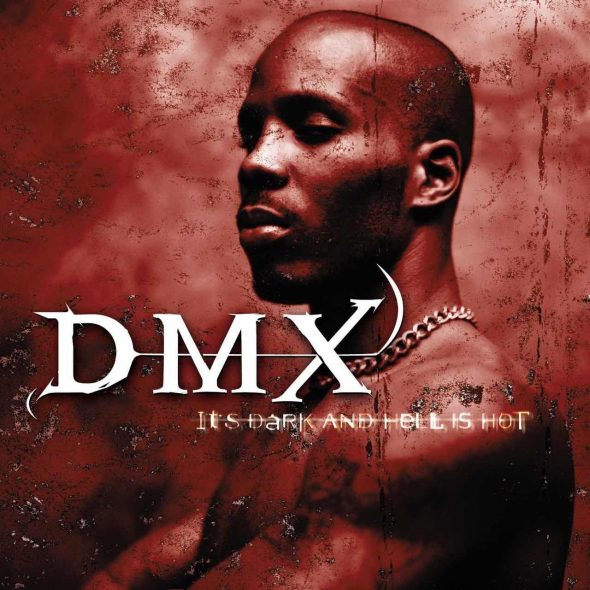
Overthinking It has hosted some posts of late debating pop-cultural parodies, like Starship Troopers and Steel Panther. These posts have generated some contentious yet rewarding discussions. In these posts, and the discussions that follow, a common question has emerged: does the fact of being a parody excuse the parody from being offensive? Is “I’m Just Kidding, Guys” a sufficient defense?

People go to the movies for a variety of reasons: escape, catharsis, inspiration, a date, an air-conditioned room on a muggy Sunday afternoon. Rarely do we go in order to learn something. And we’re okay with that. We sacrifice science and accuracy in the name of entertainment. Hollywood has a hard time getting physics right: do bullets spark when they hit a metal surface? Can a bus traveling at 55 MPH jump a forty-foot gap? And just how long does it take a kid to fall from Niagara Falls, anyway?
But Hollywood has an even harder time depicting genius.
By “genius” I don’t just mean exceptional technical ability or artistic talent. I mean that insane burst of creativity that breaks conventional boundaries. A genius is not just someone smarter than us, but someone so much smarter that we can’t even recognize what they’re doing. The word genius itself, in Latin, refers to a guardian spirit; someone who created a great work was said to be inspired by such an entity. “Talent hits a target no one else can hit,” wrote Schopenhauer. “Genius hits a target no one else can see.”
To put it concretely: every heist movie has its techie guy. Every Bohemian romance has its tortured artist. Every business drama has its self-made billionaire. These people are not geniuses. The fact that we can recognize the tropes they inhabit proves it. Richard Feynman was a genius. Leonardo DaVinci was a genius. Warren Buffett is a genius. And I submit that Hollywood could not produce a satisfactory depiction of them.
Why do I say that? Let’s look at a few examples.
“You are all going to make me lose my mind.
Up in here.
Up in here.
You are all going to make me go all out.
Up in here.
Up in here.”
— William Tecumseh Sherman, on his “march to the sea”
From Buchner to Buschemi, from Dickinson to DMX, the modern human is oft-beset by the specter of madness. Denied the comforts of microcosmic tradition and ritual, torn from the circadian rhythms of preindustrial life, and disarmed of macrocosmic rationality or consonance, the modern human is forced by exposure, education and experience to confront paradox, treachery, nihilism, contradiction and, above all, brutality, within a paradigm that does not admit to the existence, let alone prevalence, of these things.
In such circumstances, whatever the threat without may be, the true threat is within — that your own mind and body will reject reality and rebel against your self-control, plunging you into despair or insanity.
Perhaps one day you awaken to find yourself transformed into an enormous bug.
Perhaps you find yourself in a bank, responsible for hostages you have not taken — mistaken for a bank robber, when you have done no such thing — fired at by ground- and airborne sharpshooters for the crime of banking while black, even as you save the lives of the very men looking to take yours.
It’s enough to make a man lose his mind.
Up in here, up in here.
THERE ARE HUGE THE DARK KNIGHT SPOILERS IN THIS POST. BE WARNED!
I WILL ALSO PUT A RANDOM STEVEN SEAGAL MOVIE SPOILER AT THE END OF THIS POST. GET EXCITED!
If you’ve seen it, you’ve talked about it. Maybe you cringed. Maybe you cried out. Maybe it totally surprised
you, or maybe, like me, you’d heard a little bit about it, but when it actually happened, it still surprised you, and you still cringed, and maybe you still cried out a bit, but you’d rather not draw attention to that, so you won’t mention it except in your blog.
Because, sure, Christopher Nolan’s latest Batman film is a dark and compelling exploration of the moral hazards of political necessity. It’s a brave reinvention of the superhero genre. It’s a Boffo Box-office Breaking Batnanza (as Variety might put it if they felt feisty).
But mostly, it’s two-and-a-half hour framing device for a really disturbing scene with a pencil.
You know it’s true. Find out what makes the Joker’s pencil so magical after the jump —