posted by fenzel on Tuesday, March 16th, 2010 at 7:00am
I want to suck (your blood).
Welcome to the desert of the vampire.
Oh, you thought Twilight had driven a stake through vampire mythos – that with its sparkly, daywalking Christian Rock Emo vibe, it had finally cast asunder the resonance and insight of the vampire myths and left them in shards on the dry, dusty ground of a vast cultural wasteland.
Well, you haven’t seen Vampirum Ad Absurdam – the true return to dust of Romania-via-Ireland’s tortured legacy – until you’ve seen the video to the late-2009 Timbaland single, “Morning After Dark,” featuring French recording artist ShoShy and sometimes, depending on the version, that sultry creature of the night: Nellie Furtado. Observe:
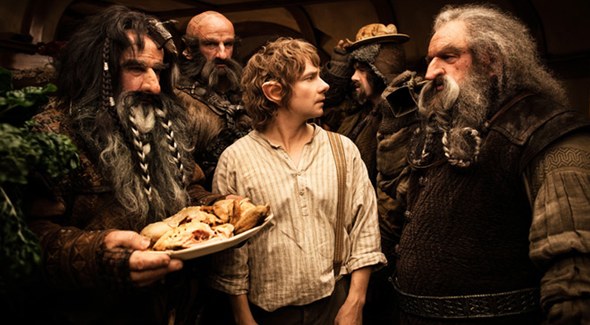
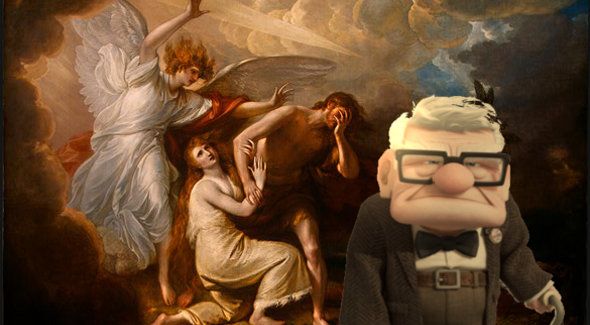
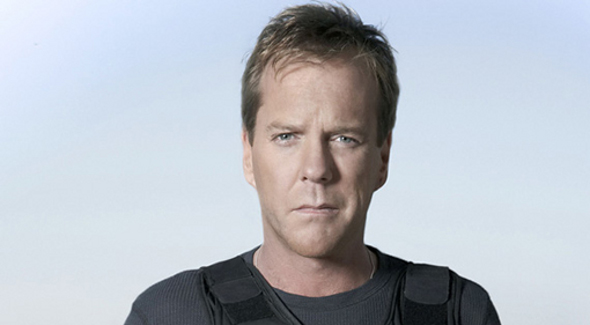
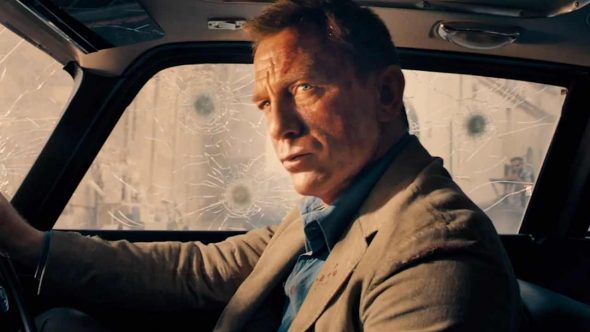
Count Dracula
Lestat Di Lioncourt
Blade
Angelus
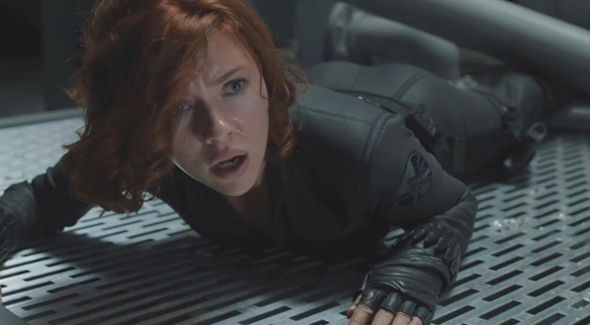
Ultraviolet
Edward Cullen
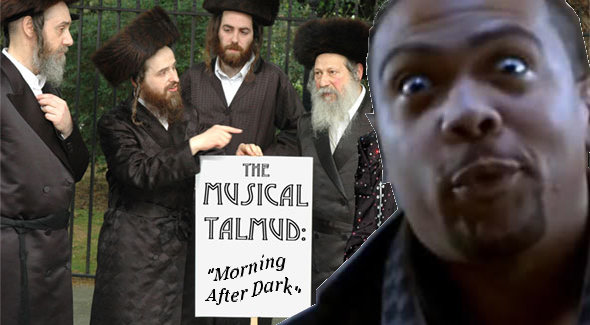
Timbo “Crazy Eyes” McGee
Witness the final descent of vamp. And yet…
As any archaeologist can tell you, there is a lot of wisdom to be found in a ruin. Why has vampsloitation sunk so low? Why does it just not make any goddamned sense anymore? What are the key contradictions that have spoiled the saga of the bloodsucker?
What confusions and conflicts in our own society are reflected in this garbled attempt to serve so many masters at once?
All this, and a vampire who thinks “You’re dope enough yep,” and says “I’m like wow,” after the jump –
posted by fenzel on Wednesday, August 12th, 2009 at 7:16am
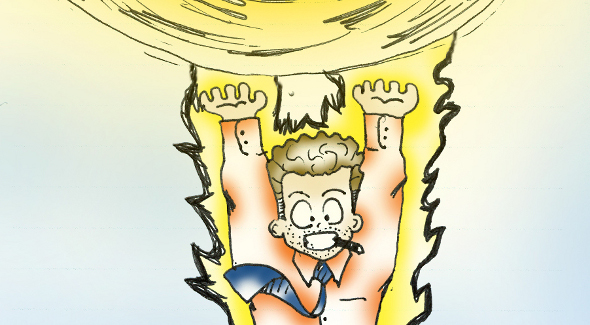
As we’ve established in parts #1 and #2 of this 48 part series, there are a lot of things I love about Akira Toriyama’s Dragon Ball. The disheartening arrival of the abomination Dragonball Evolution dulled my enthusiasm for a time, but I feel it flowing back into me, raisin’ the ol’ power level back up to arbitrary numbers.
Anyhoo, one of these things I really love about Dragon Ball is that its elegant, elemental narrative style and clear characterization make it easy to notice the wide variety of tropes, motifs and other devices that Toriyama uses to guide and develop his storylines. It has the epic Brechtian quality of a theatrical production where you can see the wires and the lighting equipment, without breaking the emotional identification and welcoming effortlessness of Stanislavski’s “Magic If.”
So, taking a bit of a break from using everything else I know to try to explain Dragon Ball, today I will use what I know about Dragon Ball to explain something else. Namely, one of the most useful and interesting distinction in parts of speech across poetical and literary systems, and also one of the most neglected in the casual enjoyment of art.
Today’s battle in the expansive desert, full of its elaborate rock formations that all produce prodigious dust clouds upon their destruction?
Metonymy and Metaphor. If these are things you’re not 100% solid on, read on, increase your literary power level, and actually learn something pretty simple that will help you enjoy art and lesser things you already like all the more. Because they’re certainly using it . . .
(Oh, and if you’re 100% solid on them, you’re clearly an enthusiast, so that is no excuse to turn away from the “Read More” button)
posted by fenzel on Wednesday, July 15th, 2009 at 9:14am
I’ve been playing a lot of Super Smash Brothers: Brawl lately, and I played Super Smash Brothers Melee religiously for years (at least, wow six or seven years by now).
Religiously, hm?
It's-a me! Pentecost!
At the heart of Super Smash Brothers is solid gameplay, but on the surface is misplaced familiarity. Take something that doesn’t belong in a fighting game, put it in a fighting game, and suddenly there are all sorts of unintended joys. It took everybody a while to warm up to the Tekken guys (and I, frankly, still haven’t), but there’s a sincere pleasure to playing with these familiar characters as they fight. It’s the sort of fantasy that’s always part of the artistic imagination. It worked for tennis, it worked for golf, it worked for paper, it worked for karts — when you shoehorn in Nintendo characters, the game becomes more familiar, more interesting and more fun.
Shoehorning, hm?
More fun, hm?
What follows is an experiment . . . can the Smash Brothers principle make anything fun? How much of the original shines through, and how much is just nonsense? Can it spice up something that’s solid at its core, but could definitely gain something from being more familiar, more interesting and more fun . . .
posted by fenzel on Wednesday, June 3rd, 2009 at 10:16am
Up 2: Next Year in Jerusalem
“He caught him up, and, without wing
Of hippogrif, bore through the air sublime,
Over the wilderness and o’er the plain,
Till underneath them fair Jerusalem,
The Holy City, lifted high her towers . . .
. . . There, on the highest pinnacle, he set
The Son of God.”
– John Milton, Paradise Regained, Book IV
The kindness of the world toward your existence turns out to be an illusion of youth, and all love dies. Man must keep his faith and promises, even as he ages toward death — find a place to stand firm, even as he falls.
Pixar’s Up and John Milton’s great poems Paradise Lost and Paradise Regained are about more than what they have in common. A laundry list of their similarities would hardly be interesting (especially if you haven’t read the poems). But they meet at a critical and compelling place in what I like to call the Artistic Project.
This balloon is about to get heavy, so if at any point you need a little extra lift, bookmark this.
Now, let us go, hand in hand, with wandering steps and slow, to find our solitary way —
posted by fenzel on Wednesday, March 18th, 2009 at 8:39am
Twenty Four is in full swing (I’ve spelled out the number to comply with Overthinking It’s copious style guidelines), which means it’s time for the annual spring tradition – going rogue.
For the uninitiated, “going rogue” is the process by which defense, intelligence, counterintelligence and law enforcement professionals begin a shift of active duty. It is the third step in the standard U.S. government four-step defense, intelligence, counterintelligence and law enforcement operating procedure (or S.U.S. FSICCLEO).
What is S.U.S. FSICCLEO, and what does it tell us about what we think about order?
posted by fenzel on Thursday, December 18th, 2008 at 8:43am
With the arrival and departure of the last Weezer album, Pork and Beans, concluded without incident,
This is no longer provocative.
and, more importantly, with its world dwelling in a cultural space between irrelevance and exhaustion, I think it’s about time that we, perhaps a year or two late, declare that hipsterism is over.
And I don’t mean “so over” over, using an epistemology incapable of refuting itself. I mean over like when your mom has come over to your friend’s house and you’re six and it’s been time to go for ten minutes and she’s starting to get pissed. “It’s over, Peter, get in the car,” over.
And as with the fall of all great empires, that makes this time for armchair anthropologists to pick apart its corpse. Or, if we’re feeling less like vultures or consider trucker hats less than Imperial — make fun of its former halfhearted iconoclasm. Resistance is, after all, futile.
My take on why the reason you like your Thundercats shirt now is fundamentally different from why you liked your Thundercats shirt in 2002, plus why ‘90s techno will never die, after the jump —
posted by fenzel on Wednesday, September 17th, 2008 at 12:04am
This time around, I don’t think I’ll be able to give our next candidate quite the respect and time it deserves.
It is the most important film about race in America made yet in this young century.
And perhaps I will return to it in the future in even more depth, because it certainly deserves it.
Of course, I’m taking about Harold and Kumar Go to White Castle.
Consider this the Cliff’s Notes – my short, simple attempt at tackling this cultural touchstone. And of course you choose to use the Cliff’s Notes, because you fail to understand how the competitive landscape of being young in America actually works.
Or perhaps because you know it all too well.
Learn more about that greatest story of the 2000s, the rise of Asia and the Asian-American, and what this remarkable little comedy has to say about it, after the jump –
posted by fenzel on Thursday, August 14th, 2008 at 7:04am
I present to you as a special peek into my other projects (most of which revolve around a very cool theatre in Greater Boston), an entry into the Providence, Rhode Island 48 hour film project, Monday the 13th, by Nature’s Credit Card Productions (a new team we put together earlier this year). You can watch other 48 hour films at www.48.tv.
Our movie was selected for Best of Providence and won the Audience Award at the Best of Providence showing as well as the “Best Rhose Island movie” for its references and jokes about Providence and the area, which they like to encourage.
To keep you honest, every team in the city gets the same prop, character and line of dialog, and each team picks a genre out of a hat. For us, it was:
Character — A hairdresser named Monty Chaney
Line — “If you see him again, tell me.”
Prop — A pear
Our genre — Horror
Enjoy!
Don’t know what the 48 hour film project is and want to find out? Already know what it is and want to talk about it? Just want to bash my movie? DO SO . . . after the jump –
posted by fenzel on Saturday, June 14th, 2008 at 7:45am
I’m a little late to the party on this, and I’m reticent to go too political in this blog, but this piece of overthinking is too good and right up our alley to go unremarked.
By the way, this isn’t the last time I’ll discuss LisaNova, who I think is a very interesting cultural figure about which you can say quite a bit. But without further ado:
The amazing original clip and a bit more analysis after the jump . . .
posted by fenzel on Sunday, June 8th, 2008 at 10:07am
[Overthinking It Magazine is the weekly feature where we give you articles you'll like all the more since the sabbath gives you an extra minute to ponder them. It may not replace your Sunday morning tryst with the newspaper of record, but we promise it will give you lots to overthink about. Oh, and if you're in a newsreader, click through to the site. I spent precious time on that graphic. --Ed.]
For your overthinking consideration, I give you Mediocre Film’s hit web series, Retarded Policeman:
It stars the very funny Josh “The Ponceman” Perry, who is an aspiring professional actor and has Down Syndrome.
If you’re like me, your first reaction after laughing (it’s a good little show that’s very funny in its own right) was, “How am I supposed to feel about this?”