Articles tagged with critical theory

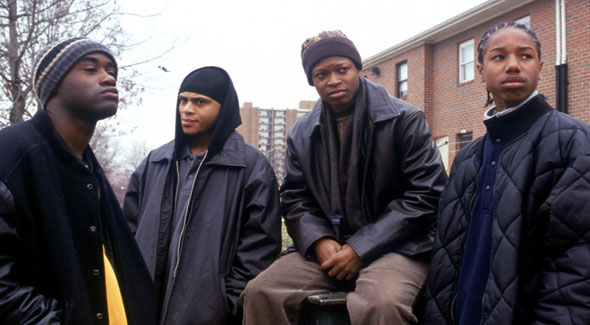
Overthinking The Wire (Season 1)

posted by mlawski on Monday, January 25th, 2010 at 7:00am

[This article is full of spoilers for season 1 of The Wire.  It covers only season 1 of The Wire, which is, thus far, the only season I’ve seen. So no spoilers for later seasons in the comments, please.]

Overthinking It, if you haven’t heard, is two years old.  Hooray, good for us, pats on the back, etc.  What’s more interesting to me is that, over those two years, we keep returning to the same question over and over and over again: How do we judge pop culture?  Is there an objective way of saying “This TV show is Good” or “This movie is Bad,” and, if so, how do we do it?

Beneath that giant rhetorical umbrella drip these fascinating sub-questions: Is Glee “good” because it’s entertaining, or is it “bad” because it doesn’t have a coherent continuity?  Should we judge Avatar based on its opsis (Aristotle for “spectacle”), based on its mythos (a.k.a. “story”), or based on other criteria?  Why does everyone consider The Simpsons of the 90s to be superior to The Simpsons on air today?  And why can’t I like the new Battlestar Galactica even though everyone tells me it’s the pinnacle of televisioned arts?

We at Overthinking It haven’t come up with real answers to any of these questions.  Well, not answers we can agree on, anyway.  Because of that, I’m coming to the conclusion that looking for an objective measure of a piece of art is an impossible task.  That’s right, folks: I’m becoming a pop culture relativist.

So “good” art is relative, huh?  No one can define it objectively; no one can agree on what it is.

Except The Wire.  Everyone agrees about The Wire.

What’s the deal?  How can people who spend hours—days, even—bickering over the merits of Showgirls and Family Guy drop their verbal weapons and sing kumbaya together over some canceled HBO series?

My answer, or at least more questions, are below the fold.

The Bromantic Gaze

posted by sheely on Monday, January 5th, 2009 at 8:27am

bromance

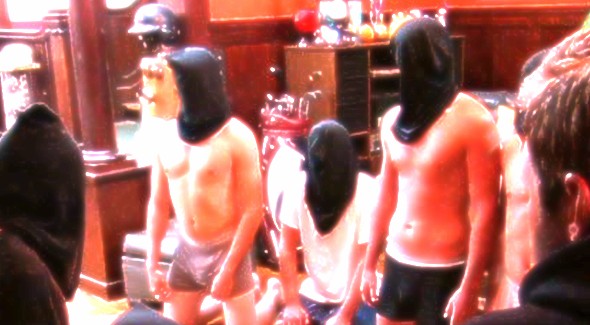
On the same night that MTV unleashed The City upon the world, the network also premiered Bromance, a reality competition show in which 9 dudes vie to be the new best friend of Olympian offspring/former Hillster Brody Jenner. The ostensible motivation for the show is the increasing visibility of bromances- male homosocial relationships characterized by reasonably high levels of physical and emotional closeness. Although the concept of homosociality itself doesn’t imply anything other than a social relationship between two members of the same sex, a number of gender/queer studies theorists have argued that muted sexual desire has long been an intrinsic component of homosociality in Western culture, and that shifts in what kind of behavior society defines as “gay and therefore bad” have historically driven changes in the prevalence of homosocial romantic friendships.

Indeed, a number of mass media trend pieces have postulated that the recent surge in the amount of bromantic behavior depicted in film and television has been driven in large parts by the integration of a number of aspects of gay subculture into the mainstream, which in turn has lead to more widespread social acceptance of man-on-man affection.

Is the cultural moment of the bromance really indicative of increased mainstream acceptance of homosexual norms and behavior, or is it just the status quo in new, more homoerotic clothes?

Slashing Private Ryan

posted by stokes on Tuesday, February 5th, 2008 at 11:07pm

war_is_hell

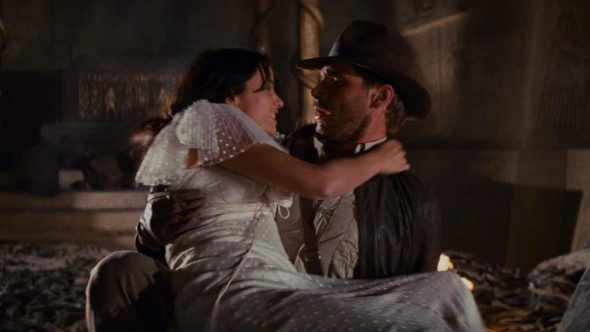
So I’m reading this film studies article by Linda Williams called “Film Bodies,” which explores the connection between horror films, pornography, and tear-jerkers. She actually makes a pretty persuasive case. Each genre shows us actors experiencing the things we as audience members are supposed to be experiencing (whether it’s terror, horniness, or grief), each displays an excess (of violence, of sex, of emotion), and each focuses on the body engaged in a kind of fit (death throes, orgasm, sobbing) accompanied by inarticulate vocalizations (“NOOO!” “YEEES!” “WAAAH!”) and the fetishized release of bodily fluids (blood, semen, tears). I was a little skeptical about the inclusion of tears in that last one until I remembered this scene from Garden State, which is an emo money shot if I ever saw one. (The salient part appears right at the start of the video*, after the jump.)

overlistening: I Missed The Bus (Kris Kross-1992)

posted by sheely on Thursday, January 24th, 2008 at 2:31am

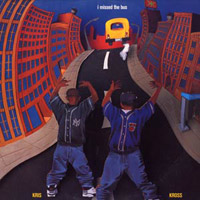
Kris Kross- I Missed The Bus ImageI’ve always appreciated the honesty of this song. Rather than the posturing and posing that characterized much of 1990s hip-hop, I always believed Daddy Mac and Mac Daddy wrote about what they knew on this track- no gangsta posturing, no “smacking bitches”, just the pure anxiety of two kids who overslept for school.