[Note: spoilers will abound.]
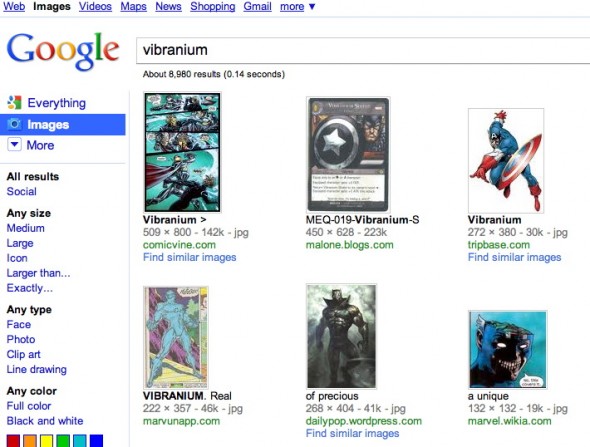
Do not do a Google Image Search for “Vibranium.” The results aren’t pornographic or anything – just really, really dorky.
Hey, I’m not trying to hate. I had a fun time at that movie. It ain’t broke (it is in fact quite flush with cash), so why mess with it? And yet, as you already know if you’ve listened to our podcast (or if you saw the movie), there were some story issues. It seems to have two plots going on at once. On the one hand, there’s the “Holy crow, my power armor is slowly killing me!” plot, on the other, there’s the “Holy cats, Mickey Rourke is killing me a good deal quicker!” plot. These don’t really connect in any meaningful way, and neither one of them is tied up very convincingly. The poisoned armor plot gets a deus ex machina, with Nick Fury and Tony Stark the Elder hiding the chemical formula for Vibranium in a forty-year old architectural model (a Da Vinci Code solution to an Iron Man problem), and the Mickey Rourke plot ends with Tony Stark learning the power of friendship or some such malarkey. Honestly, it’s probably not even that: they just fight until the movie’s pretty much over, and then the bad guy blows up. Still, I’m sure that some writer thought it was important that Tony not be able to defeat Whiplash without giving his new pal War Machine a superpowered high five.
Or at least that’s how the plot works – putting it charitably – in the version of the film that we saw. But I am almost sure that that’s not how the plot worked in the first draft of the script. In fact, I am willing to bet you my entire share of this year’s profits from Overthinking It that before the script got focus-grouped to death, the two plots did connect, and as a result the ending felt a lot less tacked on.
How do I know? Because I’ve seen it before. Iron Man 2 is a corrupted version of a very ancient story, that’s been told in one form or another for something like a thousand years. And although this story is almost unrecognizable in the version of the movie made it to the theaters, you can still see traces left behind from an earlier draft. So let’s put on our private eye hats, and do that trick where you take a pencil and lightly shade in the blank sheet of paper left on the top of the memo pad, so you can see the impression left by whatever was written on top of that. Of course, this kind of speculation always runs the risk of being completely off-base: there’s a chance that I’m wrong, that we’ll just wind up uncovering a picture of a giant erection, like Jeff Bridges did in The Big Lebowski. But if I’m right, we will end up with…
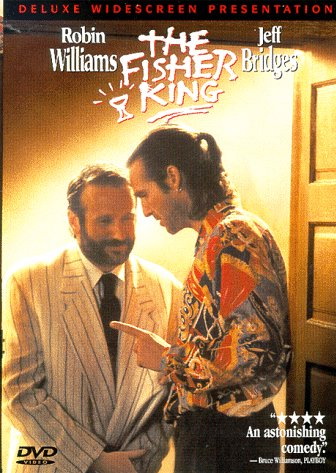
Speaking of Jeff Bridges…
The Fisher King. Oh, I’m not actually talking about the Terry Gilliam movie, although that is based on the same story. I’m talking about the Celtic legend that first shows up in the second branch of the Mabinogion, is refined and expanded by Chretien de Troyes and Wolfram von Eschenbach, and more or less finalized for the modern age by Richard Wagner in Parsifal. There have been so many versions of this story that trying to explain the plot is a little pointless – instead, I’ll just list some of the important elements and characters.
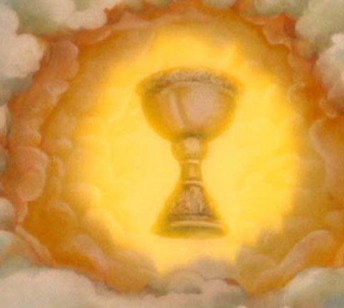
The Grail
The Grail. Usually, we’re talking about the same holy grail that’s associated with Monty Python and Indiana Jones (and to a lesser extent with our lord Jesus Christ), but in some cases it’s a different one. In any case, the grail typically has the following properties. 1) It makes crops grow, powering the feudal economy. 2) It can cure the sick and/or return the dead to life. 3) At the start of the story, it is broken and needs to be repaired, which means that the crops have not been growing in a while. Typically the Grail is kept in a castle (the Grail Castle), and guarded by…
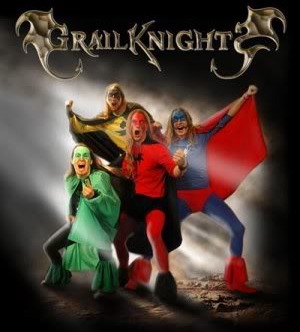
The Grail Knights
The Grail Knights, a family or secret society that has been passing the grail down from generation to generation without ever really unlocking its true power. They either adopt the protagonist at the end, or he takes over for them, or he turns out to be one of them all along. Also, they’re feudal nobility. The old Knight from Indiana Jones and the Last Crusade is a little weird in that ALL he does is guard the grail. In most versions of the story, they are landowners and members of the military. Most of these guys are just interchangeable extras, but you sometimes meet Titurel, the Fisher King’s father (who is usually also wounded – see below), and a knight named Gurnemanz who kind of functions as the Fisher King’s butler.
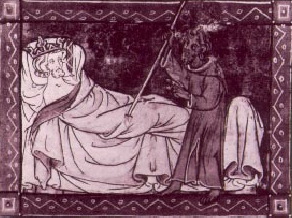
The Fisher King – Amfortas
Amfortas, the Fisher King, the current keeper of the grail, has utterly cocked things up and is therefore no longer worthy to possess it. The name “Fisher” is kind of interesting… in some versions of the story, the King is so crippled (see The Wound, below), that all he can do is sit on the river bank and fish. But it seems to me that there’s a pretty good chance that it’s a scribal error: the oldest version of the story where he appears with that name is in French, and there’s hardly any difference between Le Roi Pêcheur (the Fisher King, or possibly the king who picks a lot of peaches) and Le Roi Pécheur (the Sinner King, which seems more relevant). In any case, his most important attribute is –

The Wound
The Wound. The Fisher King is constantly bleeding from a wound that will never heal, somewhere in the region of his thighs or his groin. Sometimes, the wound is passed down through the family of the Grail Guardians: when Amfortas’ father Titurel shows up, he’s usually so badly wounded that he can’t even walk. (I like to imagine an extreme version of this, where you’ve got a whole castle full of wounded Kings, princes, second cousins, and so forth.) The Wound serves as a constant reminder of the King’s unfitness to possess the grail, and it’s linked in a sympathetic magic kind of way with the barren countryside: as the king suffers, so does his nation.

Parsifal – The Holy Fool
Parsifal, a.k.a. the Holy Fool, a.k.a. the Protagonist – a strapping young lad of pure and noble heart whose job it is to fix it all. At the end, he gets the Grail, cures the Wound, restores life to the countryside, and becomes the new king, and declares a national holiday with free beer and potato salad for all. What he has to do to accomplish this varies wildly from telling to telling — sometimes it’s literally a matter of just showing up.
And how does this play out in Iron Man 2?
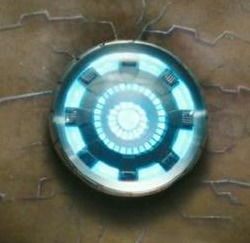
The Grail
The Grail: The Arc Reactor. This is a theoretically limitless source of free electricity, which is as important to the information economy as crops were to the feudal economy. While it doesn’t heal the sick in general, it’s certainly keeping Tony alive. And at the start of the story, it is a deeply flawed piece of technology.

The Grail Knights
The Grail Knights: Stark Industries, or more specifically the Stark family itself. We’re told in no uncertain terms that Tony’s father, bizarro Walt Disney, had the idea for both the Arc Reactor and The Avengers back in the day. Sure, he couldn’t actually create either one, but the Grail Guardians never do anything more than lay in groundwork. As for being a landowner and a member of the military… the Stark family basically is the military industrial complex. So yeah. Oh, and lest we forget, Tony starts off estranged from his father, and ends up reconciled with him. Titurel is Stark’s father, H. Anthony, and Gurnemanz is Happy, or possibly the computer voice Jarvis.
The Fisher King
The Fisher King: Tony Stark. This is kind of a tricky one, because he’s definitely the protagonist, which makes him the Holy Fool as well. The two roles are kind of collapsed onto each other here, which has some implications we’ll get to in a bit. In story terms, though, there’s not a whole heck of a lot of difference between “unworthy king replaced by worthy king” and “unworthy king becomes worthy.” And he certainly has the grail/arc reactor, and he certainly is afflicted with the Wound. Speaking of which –
The Wound
The Wound: Palladium Poisoning. Pretty straightforward, right? But do note that Tony’s sickness is preventing him from running Stark Industries. As the king suffers, so too does the country suffer.
The Holy Fool
The Holy Fool: Tony Stark again. This one is even trickier. The defining characteristics of the Parsifal character are that he’s kind of dumb, but really sweet-natured, and the defining characteristic of Tony Stark is that he’s really smart, but kind of a dick. But while Tony Stark isn’t an innocent, he is kind of infantile. He has no control over his basic drives, and he has no concept of how to behave in polite society.
Coming up next: Wagnerian Opera, Penis Jokes.
Klingsor.
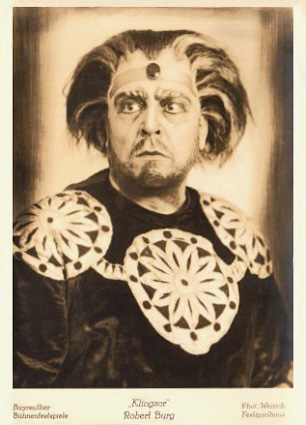
Now let’s talk about Wagner’s opera version. Because the original legend is light on conflict, Wagner added some villains to the piece: an evil wizard named Klingsor, and a femme fatale named Kundry. (These guys do show up in some of the older versions, but pretty much just as names.) Wagner’s Klingsor is an interesting character. At first, he wanted to become a Grail Knight, but they turned him down because he wasn’t pure enough. Then he cut off his own genitals to curb temptation… only to learn that functional genitalia are a prerequisite of membership. (You’d think he would have read that in the brochure.) Understandably peeved, he created a twisted shadow-version of the Grail castle a couple of valleys over, and dedicated his life to destroying the knighthood. This is a pretty unique character, right? Doesn’t seem like something one would duplicate by accident? Okay, now think of the Sam Rockwell character in Iron Man 2. Desperately wants to be like The Fisher King/Tony Stark? Check. Creates a shadow version of The Grail Knights/Stark Industries? Check. Emasculated? Well, you saw how well that missile he built for War Machine worked out.
Anyway, Klingsor and Kundry plot to steal the Fisher King’s magic spear, the Lance of Longinus. This artifact doesn’t show up in the older versions either, to my knowledge, but it is traditionally associated with the Grail so it kind of fits. It also makes the already intense sexual subtext of the legend re-ding-dang-diddly-donkulous. Observe:
—
Kundry: Heeeey handsome!
Amfortas: How you doin’?
[Amfortas drops his spear, he and Kundry embrace]
Klingsor [popping out of the bushes]: Yyyyyoink!
[Grabs spear, pierces Amfortas through the groin, departs]
Amfortas: Noooo! My two favorite long pointy things!
[Scene change: twenty years later. Enter Amfortas, carrying the Grail, and bleeding.]
Amfortas: Well ain’t this a bitch. Sure I’ve got this concave fount of boundless fertility [he gestures to grail], but somehow without my rigid staff of manliness, the thrill is gone.
Gurnemanz: … You’re talking about the Spear, right?
Amfortas: Does it even matter?
Gurnemanz: Well, whatever it is, I hope you find someone to fix it soon. Because we’re all hella starving.
Amfortas: You think you’ve got it bad, at least you don’t spend a week out of every month bleeding from your groin.
Gurnemanz: … You’re talking about the Wound, right?
Amfortas: Does it even matter?
—
Kundry
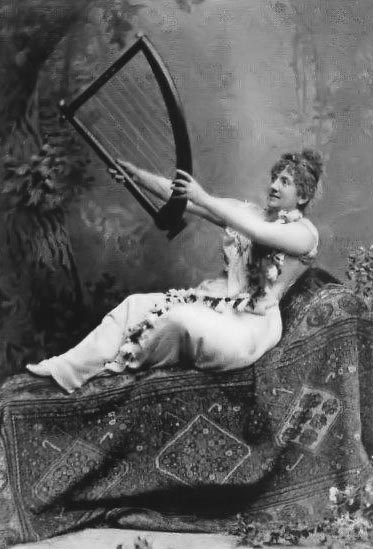
Now here’s where it gets really interesting. When Parsifal shows up, he obviously has to defeat Klingsor and get the spear back before he can fix the grail. But this doesn’t mean he has to beat Klingsor in an arm wrestling match, or anything. Instead, he has to let Kundry try to seduce him. Maybe less impressive, considering it’s twenty years later, but presumably she’s a cougar. And Parsifal has some serious mommy issues. Kundry’s pickup line, no joke, is “She who gave you body and life/ And before whom death and folly must flinch/ She offers you today, as the last greeting of / A mother’s blessing, the first kiss of love!” And this almost works. But not quite, and once Percival turns her down, Klingsor basically just explodes.
Most later versions of the Fisher King myth take a big cue from Wagner here. Not the incest thing – the idea of a hereditary test, passed down through the ages along with the grail and the wound. Parsifal can’t heal Amfortas until he prove his purity by passing the very test that Amfortas failed (i.e. not getting it on with Kundry). For a modern version of this, see Star Wars, where Luke has to pass the “strike him down, and we can rule the galaxy together!” test that Anakin failed when he beheaded Count Dooku. Lucas bungled this badly, of course, since the moment where Vader killed Dooku should have been the climax of the first trilogy, not throwaway shock gag. But you get the idea.
Now back to Iron Man Two.
Here’s the Whiplash Plot as it appeared in the film:
1) Arc reactor technology was created by Tony Stark’s father, with some minor assistance from a jerk named Ivan Vanko. (Btw, I love it when Nick Fury is like, “Oh, Vanko was bad. He wanted to use the reactor to make money,” while he and Tony are sitting in a luxurious mansion on the Stark family’s private freaking island.)
2) For totally valid reasons, Stark kicks Vanko out of the country.
3) Vanko’s son comes back looking for revenge, even though he’s got no legitimate reason to be mad.
4) Tony tries fighting Whiplash and seems to defeat him, but this defeat cannot be final/satisfying because it’s only 1/3 of the way through the movie.
5) Tony must learn the true meaning of friendship before he can truly defeat Whiplash. Sort of.
Now let’s see the version with intact Wagnerian Fisher King symbolism:
1) Arc reactor technology was created by Tony Stark’s father and Ivan Vanko, working together.
2) Tony’s father sins, stealing the technology from Vanko and kicking him out of the country.
3) Vanko’s son comes back looking for wholly justified revenge; a nemesis straight out of Greek tragedy.
4) Tony tries fighting Whiplash, and seems to defeat him, but this defeat cannot be final/satisfying, because his father’s sin has not been expiated.
5) Tony must make restitution for his father’s sin before he can truly defeat Whiplash.
To my taste, this is already streets ahead of the Mickey Rourke plot we saw in theaters. Let’s check in with the Vibranium plot. Here’s the way it went down in the film we saw:
1) Arc reactor technology was created by Tony Stark’s father.
2) Technology is killing Tony — because Tony doesn’t believe in himself? Because he doesn’t realize how much his father loved him? Or something. No compelling reason, that’s for sure.
3) Tony must fix the technology by inventing Vibranium
Yucksville. Now let’s do the Fisher King version:
1) Arc reactor technology was stolen by Tony Stark’s father.
2) Technology is killing Tony — because of his father’s sin
3) In order to fix technology, Tony must first make restitution.
See how much better that works now? And it’s easy as hell to write it, too. The secret key for making Vibranium should not come from Stark’s father’s ripoff of Epcot Center, but from Whiplash
Had Stark’s father not double-crossed his old partner (we would learn), the arc reactor would have been perfected back in the 70s, and Stark would not be dying of Palladium poisoning. (Think about Rourke’s parting line in the prison sequence: “Palladium in the chest — painful way to die!” Doesn’t that work so much better if the taunt is not “Haw haw, you’re dying,” but rather “I know something you don’t know?” This is one of those places where I honestly believe an earlier, more Wagnerian draft of the script is shining through.) The whole middle section of the movie needs to be about Stark coming to terms with this: first refusing to believe his old man was a bad guy, then admitting it, and then uniting with Vanko to finish what their parents started. And sure, if you want to, have Vanko go back to being bad at the end… maybe Hammer approaches him and makes an offer he can’t refuse, maybe he realizes that all the money and recognition in the world won’t bring his father back and just flips out. Maybe he thinks that a world with only one superpower is tyranny, and wants to distribute power armor to every government in the world free of charge. Hell, to really unite ALL the movie’s themes, maybe he takes the U.S. government’s side and tries to turn over the suit to Senator Gary Shandling (who would need to be even more conspicuously dickish, in this version of the narrative). Whiplash gets blown up, and then in the last scene, we see Tony unveiling the new and improved Arc Reactor at the closing ceremonies of the Stark Expo. We cut to a close up as he takes a deep breath, and starts off with something like “The miracle you’re going to witness today would not have been possible without the efforts of two men, Ivan and Anton Venko…” and possibly even talking some trash about his own father along the way. (Think back again to the opening of the movie, where Tony says something like “The Stark Expo was my father’s dream and his gift to the world, because he was a prince among men who farts rainbows and sneezes gumdrops!” Doesn’t that make more sense if it’s setting up a fifth act reversal, where Tony gets up on stage to let everyone know what a so-and-so his old man really was?)
It’s pretty easy to see why they couldn’t do this plot, though. For one thing, there’s no room in it for Nick Fury and the Agents of M.A.R.K.E.T.I.N.G. S.Y.N.E.R.G.Y. And therefore no room for Scarlet Johansson’s catsuit. For another, America may not be ready is demonstrably not ready for a big-budget action movie where the main character’s father really does turn out to be an irredeemable asshole. Most of all, this version makes you sympathize with terrorists. Make no mistake, when Whiplash jumps out on the track and starts chopping up racecars, that’s a terrorist act – to then turn around and say “you know what, he had his reasons for doing that, and while he may still be a bad guy he was probably right to feel as angry as he did,” would be a pretty radical move.
Even in the version that made it to theaters, mind you, the terrorist Whiplash is more sympathetic than the corrupt American businessman Hammer. And THAT’S interesting. But it’s a topic for another post.
Awesome!
Arc reactor technology was created by Tony Stark’s father and Ivan Vanko, working together.
Anton Vanko. Ivan is the son, the Mickey Rourke character.
Well I’m convinced that in the original draft of the script they switched the names!
Seriously, though, good catch Dez. I had trouble thinking of him as anything other than Mickey Rourke… should have double checked.
“America may not be ready is demonstrably not ready for a big-budget action movie where the main character’s father really does turn out to be an irredeemable asshole.”
Like the Empire Strikes Back? Good essay up until that point.
Though I got the impression from other reviews that the plot of Iron Man 2 was just something cobbled together to let Downey due his schtick and to show some fights. If this is true, maybe it should be that complicated.
Bravo! Bravo!
Rock solid post of OTI
Focus on the word “irredeemable,” there, and think about what happens in Jedi. ;-)
Even before he goes back to the good side, Vader has style. There’s a difference between being evil and being a jerk. Evil is more palatable.
“And sure, if you want to, have Vanko go back to being bad at the end”
…by indicating that he actually only helps Stark to get him to lower his guard, and perhaps for the pleasure of being the one to kill Stark himself. If he also secretly sells the tech to Hammer, this reopens the opportunity for Stark to need the Grail Knights- in this case, War Machine, Nick Fury, and SHIELD.
This adds another layer to the imagery, too. Where as Tony Stark’s father is a “so-and-so” and the son brings redemption, Vanko’s father was betrayed while his son becomes the betrayer. Might even soften the light-on-terrorism angle.
Man, between mlawski’s new version of Episode I and your version of this, I think we seriously need a film or TV series with the OTI team as writers.
@Norman: Although I’d love to accept the compliment, the new version of Episode I was written by Mr. Perich. See?
http://www.overthinkingit.com/2010/03/22/star-wars-episode-i-reimagined/
You know what? I’m going to accept the compliment anyway. Thanks, Norman! :)
solid post. great work.
Bravo. Really great work.
Of course, I’m a sucker for any post that links to http://www.imdb.com/title/tt0286716/, but in this one, it was icing on the cake.
As for the Empire Strikes Back angle, I’d say that, to an American sensibility (and skipping that not only is Darth Vader redeemable, but he doesn’t really do much onscreen in Star Wars or Empire that is particularly evil in a treacherous or repulsive sort of way – if you only count what he does onscreen, he’s the most principled and admirable of the villains in the movies), “irredeemable asshole turns out to be the protagonist’s father” is a very different animal than “protagonist’s father turns out to be an irredeemable asshole.”
The former requires that the father abandon his children and cast aside his role at some point, which makes him a deadbeat dad, and somebody most Americans are pretty comfortable villainizing.
The latter is the problem, because it suggests Americans consider the two great Marks of Cain on our own civilization — Native American genocide and African American slavery.
How many Americans have you heard say, “Well, MY family didn’t own slaves.” I’ve heard a lot of them. We definitely are defensive and sensitive to the ancestral sins of our country, and we’re uncomfortable taking responsibility for even descending from those people – either by blood or in terms of property and legacy.
Americans are uncomfortable villainizing fathers who care about their sons and perform the duties of being fathers to a reasonable degree — who stay fathers and want to be fathers — but who are still funamentally wrong or sinful in some unforgiveable way. We like to think if we perform our own familial duties, it washes us clean of our collective wrongdoing. I am a good father, therefore it doesn’t matter that most of my possessions were made in factories in dictatorships where pregnant women pulled 14-hour shifts with no breaks for less than a dollar an hour.
Take Wall Street, for example:
Gordon Gecko doesn’t have any children, and his “wife” character in _Wall Street_ is a vixen whom he knows full well is sleeping with his prospective adoptive son – and he’s okay with it, because he’s perverse and a bad person. Charlie Sheen has a real father, who is a good person but not rich, but he aspires to what Gecko has, and thinks about what it would be like to be Gecko’s sort-of-adopted-son before rejecting it on grounds of conscience.
Think about what it would be if Charlie Sheen found out at the _end_ of this movie that Gordon Gecko was his biological father and Daryl Hannah was his stepmom. The ending seems pretty obvious, “Wow, that’s creepy and awful and gross. Well, Martin Sheen, you’re the guy who always loved me and took care of me and was morally upright. Clearly you’re my _real_ dad, and even if I came from him, I’m really you’re son.”
As in, “Time for me to write all this evil out of my personal and family history by disavowing it.”
Now think about what it would be like if Martin Sheen weren’t in _Wall Street_, and Charlie Sheen knew full well the whole time that Gordon Gecko was his father. That Charlie Sheen knew he was sleeping with his father’s girlfriend, and that his father was okay with it — and that Charlie Sheen genuinely admired and sought to be like his father only to decide later on to help the airline because of his own conscience (rather than an alternative father). It becomes very hard for Charlie Sheen to appear sympathetic to an American audience. I mean, nobody would _ban_ the movie, but it probably wouldn’t be very successful.
By the way, we make a big deal in American society about how certain sorts of female archetypes must be childless, and others must be mothers, but we don’t reflect on this same phenomenon in male characters very often. We’re very uncomfortable with certain sorts of fictional characters being fathers (thus the check-swing on Stark Sr.’s past sins). We’re also very uncomfortable with certain sorts of male characters not wanting to fall in love and get married (thus the whole thing with Gwyneth Paltrow). It’s more about the individual will as a threat to the social order than about one sex diametrically opposing the other. Individual will is subverted and made minor on both ends, at least in fiction.
Thinking about Iron Man again for a second, it would have been cool if Vanko had gotten to turn out to be a good guy before dying in a climactic fight scene. Of course, Jim Rhodes needs to be War Machine, but the movie would probably be better, barring the crime against the Iron Man franchise for a moment, if Vanko were War Machine — if he ended up not wanting to help Hammer after all and took the power armor he stole from Stark for himself, to help Iron Man in the final battle. It would feel a little more Gilgamesh + Enkidu against Humbaba — the King of the World and the Wild Man teaming up against the monster.
But I like your rewrite better :-)
Personally, I think that Samuel L. Jackson was bullshitting Tony: “You father got Anton — who may or may not have been the man you were named after, which suggests that he and your dad had once been BFFs — deported because he wanted to make money, which your father was totally doing with every other form of technology he developed, never mind the fact that even if Anton went off by himself and made the arc reactor for profit your dad totally could have given it out for free as co-inventor.”
It’s enough bait for sick, hungover Tony Stark, who wants to think of his dad as A Good Guy, to dig through Papa Stark’s belongings and find the key to vibratium. But it’s not a stable enough explanation to last. Dare we hope for a confrontation with Fury when Tony asks him what really happened?
As for the “palladium in the chest… painful way to die” quote–do we know what Anton Vanko died of? Maybe heavy metal poisoning?
I was really, really convinced that Stark and Vanko were going to team up, and Stark would need Vanko to fix the polonium poisoning
as for the ‘my father was an asshole!’ plot, Harry Potter did it pretty well
i think the main problem with this film was a sag in the middle… needed a big action scene or something. Whiplash was too sympathetic and Sam Rockwell was too ineffectual
the politics of the movie gave me a headache though
This was rad as hell. :)
This is tremendous work, Stokes. I enjoyed the movie a great deal, but after reading your dead-on analysis, I think I enjoy it less. YOUR movie would have been better.
I don’t really have much to add to this, I’m not smart enough or eloquent enough to add to what’s already been said. I’ll just say that I thought this was a great essay and…that I’m extremely thankful for OI. This site and the great essays therein make the long and lonely days manning the phones and holding down the floor at a quiet funeral chapel much easier to bear.
Far better than anything I could possibly have come up with.
I did immediately find it ironic that Fury was judging Anton as greedy while in those surroundings, as well as find what he was saying almost painfully convenient. I think that scene was the most painful in the movie, actually.
Also, do you think America’s inability to deal with asshole dads is why this was made, to save the character after the first attempt failed (since there *is* no father for the protagonist here)?
http://www.imdb.com/title/tt0800080/
And this one also has the extra, connecting it to this one
http://www.imdb.com/title/tt0371746/
Do you think that just as it seems to me that Favreau is aware of the opulence – that we’re supposed to find Stark humourous, but more in the laugh-at than laugh-with way – and thus in the same way, the parts of the plot that have been executive-meddled have this sense of irony about them (e.g. when War Machine asks ‘is this really your plan?’, he is asking it for all of us – is it as easy as the power of friendship?).
(I only watched this last night, and only say the first on Tuesday)
Brilliant article, stokes. One of the best OTI posts I’ve ever read! I really enjoyed the movie and wasn’t too analytical while watching, but I did notice the plot seemed pretty muddled some how and you’ve just highlighted all the problems it had. Oh how I wish they’d make a new one using your plot, it could be the most amazing film.
Thanks for all the kind words on this article, everyone!
@Maureen – There is something really weird about the way the scene is written and delivered, and the “Nick Fury was lying” angle would explain that. And it would be a nice setup for the third movie, too… if they hadn’t already killed Whiplash off and fixed the reactor. As it is, I’m more inclined to think that the character believed what he was saying. Now as for whether Samuel Jackson believed it, that’s another matter (see below).
@Brimstone – Harry Potter is an interesting case. You’re right that most of the stuff we SEE the father do is pretty jerkish, but we’re also constantly told what a wonderful guy he turned out to be. Plus Harry’s real father figure in the story is Dumbledore anyway, no?
@Iver – Thanks for reading! So, a funeral chapel – can you tell me how true to life Six Feet Under’s depiction of the mortuary business was? Or is that something separate?
@Gab – I’m still… puzzled, I guess, by the existence of the Ed Norton Hulk. The explanation is probably that they wanted a Hulk franchise that they could tie in with the ongoing Avengers project, but that doesn’t seem like a great reason to fund a major Hollywood action picture.
@Tim Swann – The idea that Favreau might have made the scene purposefully “bad” for satire’s sake did occur to me. Both Iron Man movies have had a bunch of weird little subversive gestures – this could be one of them. I also think Samuel Jackson’s reading of the line was a lot less emphatic than was warrented – especially when you consider the kind of line reading he is most known for.